
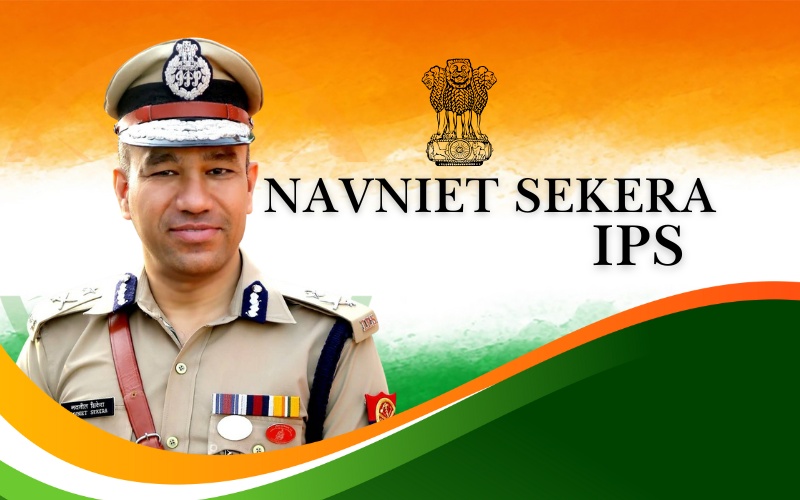
The Legendary IPS Officer Who Transformed UP Police and Created Women Power Line 1090
Navniet Sekera is a distinguished 1996 batch IPS officer serving the Uttar Pradesh cadre. Born on 22 October 1971 in Shikohabad town of Firozabad district, Navniet Sekera has become one of the most respected police officers in India, known for his innovative approach to law enforcement and dedication to women’s safety.
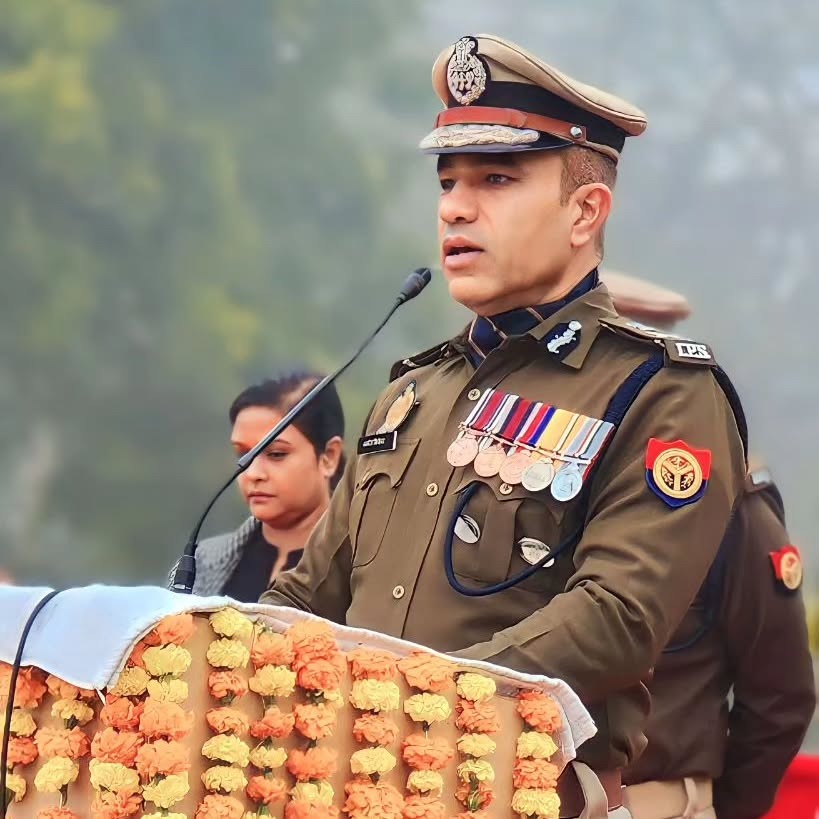
Quick Facts Summary
| Category | Details |
|---|---|
| Full Name | Navniet Sekera (Born: Navniet Yadav) |
| Date of Birth | 22 October 1971 |
| Age | 53 Years (as of 2024) |
| Birth Place | Shikohabad, Firozabad District, Uttar Pradesh, India |
| Current Position | Additional Director General (ADG), Uttar Pradesh Police |
| IPS Batch | 1996 (Uttar Pradesh Cadre) |
| Famous As | “Super Cop of UP”, Inspiration behind web series “Bhaukaal” |
| Known For | Women Power Line 1090, Encounter Specialist, Women Empowerment |
Personal Information: Navniet Sekera
| Attribute | Details |
|---|---|
| Full Name | Navniet Sekera |
| Birth Name | Navniet Yadav |
| Nickname | Super Cop, Encounter Specialist |
| Date of Birth | 22 October 1971 |
| Age | 53 Years (as of 2024) |
| Birth Place | Shikohabad, Firozabad District, Uttar Pradesh |
| Hometown | Etah/Shikohabad, Firozabad, Uttar Pradesh |
| Nationality | Indian |
| Zodiac Sign | Libra |
| Religion | Hinduism |
| Caste/Community | Yadav |
| Height | Approximately 5’10” (178 cm) |
| Eye Color | Black |
| Hair Color | Black (Salt & Pepper) |
| Marital Status | Married |
Family & Personal Life of Navniet Sekera
| Relationship | Name | Details |
|---|---|---|
| Father | Manohar Singh Yadav | Low-income farmer; Passed away in January 2020 |
| Mother | Not publicly disclosed | Middle-class farming family |
| Wife | Dr. Pooja Thakur Sekera | Social Activist, Motivational Speaker, Philanthropist, Counsellor for Women Empowerment; Founder of “Mission Sashakt” |
| Son | Devyansh Sekera | – |
| Daughter | Arya Sekera | – |
| Family Background | Lower-middle-class farming family from rural Uttar Pradesh |
Educational Background: Navniet Sekera’s Academic Journey
| Level | Institution | Course/Degree | Year | Medium |
|---|---|---|---|---|
| School (1-12) | All-Boys Government School, Shikohabad/Etah, Firozabad District, UP | Secondary Education | Till 1989 | Hindi Medium |
| Undergraduate | Indian Institute of Technology (IIT) Roorkee | B.Tech in Computer Science and Engineering | 1989-1993 | English |
| Post-Graduation | Indian School of Business (ISB) | MBA in Finance, Strategy, and Leadership | 2011 | English |
| Professional Training | Sardar Vallabhbhai Patel National Police Academy (SVPNPA), Hyderabad | IPS Training | 1996 | – |
The Turning Point in Education
After scoring well in his 12th standard examinations, Navniet Sekera initially sought admission to Hansraj College in Delhi for a BSc degree. However, he faced humiliation when college officials denied him even an admission form due to his limited English-speaking skills. This rejection became a defining moment in his life.
Undeterred, Navniet Sekera prepared for the IIT-JEE entrance examination and cleared it on his first attempt—a remarkable achievement for a Hindi-medium student from a rural background. The young man who was once denied an admission form for a regular college went on to enroll at IIT Roorkee, India’s premier engineering institution.
Physical Statistics
| Attribute | Measurement |
|---|---|
| Height | Approx. 5 feet 10 inches (178 cm) |
| Weight | Approx. 75-80 kg |
| Eye Color | Black |
| Hair Color | Black with Grey |
| Build | Athletic, Fit |
| Distinctive Features | Commanding presence, Mustache |
The Life-Changing Incident: Why Navniet Sekera Became an IPS Officer
After graduating from IIT Roorkee in 1993, Navniet Sekera had applied for an M.Tech program at IIT Delhi. His future seemed set in the field of technology. However, destiny had different plans.
The Incident That Changed Everything
Navniet Sekera’s father, a low-income farmer, began receiving threatening calls from powerful local criminals. When his father decided to file a complaint at the local police station, Navniet Sekera accompanied him, hoping for justice and protection.
What happened next would alter the course of Navniet Sekera’s life forever. The police officer at the station displayed shocking insensitivity—instead of registering the complaint, he mocked and humiliated both father and son before dismissing them from the station.
This traumatic experience kept Navniet Sekera awake for many sleepless nights. The humiliation, the helplessness, and the systemic failure he witnessed ignited a fire within him. He realized that the policing system needed officers who were sensitive, responsible, and committed to serving the common people.
UPSC & Career Timeline: Navniet Sekera’s Journey
| Year | Position/Achievement | Location/Details |
|---|---|---|
| 1993 | Graduated from IIT Roorkee | B.Tech in Computer Science & Engineering |
| 1996 | Joined Indian Police Service (IPS) | 1996 Batch, Uttar Pradesh Cadre |
| 1996-1998 | Assistant Superintendent of Police (ASP) | First posting in Gorakhpur |
| 1998-2000 | ASP | Transferred to Meerut |
| 2001 | Promoted to Superintendent of Police (SP) | Received Rs. 5 lakh cash prize from CM Rajnath Singh for developing GPS-GIS based Automatic Vehicle Location System (AVLS) |
| 2003-2004 | Senior Superintendent of Police (SSP) | Muzaffarnagar – Famous for anti-crime operations; Became youngest SSP of Lucknow at age 32 |
| 2004-2005 | SSP Lucknow | Successfully neutralized gangster Ramesh Kalia and dismantled major crime syndicates |
| 2011 | Completed MBA | Indian School of Business (after 14 years of IPS service) |
| 2012 | Promoted to Deputy Inspector General (DIG) | – |
| 2012-2014 | Conceptualized & Launched Women Power Line 1090 | Revolutionary women’s safety helpline in Uttar Pradesh |
| 2014 | Promoted to Inspector General (IG) | Appointed IG of Mahila Power Line, Uttar Pradesh |
| 2015 | Resolved over 388,000 cases through Women Power Line 1090 | Landmark achievement in women’s safety |
| 2020-Present | Additional Director General (ADG) | Uttar Pradesh Police, Lucknow; Currently posted as ADG Bhawan Evam Kalyan |
| 2020 | Web Series “Bhaukaal” Released | Based on his life and anti-crime operations |
| 2022 | “Bhaukaal 2” Released | Continuation of his inspiring story |
Major Achievements & Recognition: Awards Received by Navniet Sekera
| Year | Award/Honor | Description |
|---|---|---|
| 2001 | Chief Minister’s Award for Innovation | Rs. 5 lakh cash prize for developing GPS-GIS based Automatic Vehicle Location System (AVLS) during his service as SP Technical Services |
| 2005 | President’s Police Medal for Distinguished Service | For exceptional police work and crime control |
| 2013 | President’s Police Medal for Meritorious Service | Recognition of continued excellence in service |
| 2012 | Pioneered Women Power Line 1090 | Revolutionary helpline that transformed women’s safety in UP |
| 2015 | Successfully resolved 388,000+ cases | Through Women Power Line 1090 by July 2015 |
| 2020-2022 | Cultural Recognition | Inspiration for MX Player’s hit web series “Bhaukaal” and “Bhaukaal 2” |
Special Recognitions
- 60+ Successful Encounters: Known as “Encounter Specialist of UP” for successfully conducting 60+ encounters against hardened criminals
- Youngest SSP of Lucknow: Became the youngest police chief (SSP) of state capital Lucknow at age 32
- Public Petition for Return: When transferred from Meerut, citizens printed and distributed posters across the city demanding his return—unprecedented public support
- Dismantled Major Crime Syndicates: Successfully neutralized Shokeen Khan gang, Dedha brothers, and gangster Ramesh Kalia
- Transformed Muzaffarnagar: Converted the “crime capital” into a relatively peaceful district
Landmark Achievement: Women Power Line 1090
The Revolutionary Initiative
In 2012, Navniet Sekera conceptualized, developed, and launched the Women Power Line 1090—a groundbreaking helpline for women facing harassment, violence, or threats in Uttar Pradesh.
Key Features
| Aspect | Details |
|---|---|
| Launch Year | 2012 |
| Coverage | All 75 districts of Uttar Pradesh |
| Total Calls Handled | Over 1.4 crore (14 million) calls |
| Cases Resolved (by 2015) | 388,000+ cases |
| Response System | Rapid-response mechanism with immediate police intervention |
| Technology Used | Call tracing, GPS tracking, immediate dispatch system |
| Impact | Transformed women’s safety landscape in India’s most populous state |
Significance
Women Power Line 1090 represents one of the largest social impact initiatives for women’s safety in India. Under Navniet Sekera’s leadership, this helpline handled calls from a state equivalent to the world’s 5th largest country by population—a remarkable administrative and operational feat.
The initiative didn’t just provide a phone number; it created a comprehensive ecosystem of:
- Immediate police response
- Arrest of perpetrators
- Technology-enabled tracking
- 24/7 availability
- Trained personnel sensitive to women’s issues
The Bhaukaal Phenomenon: Navniet Sekera in Popular Culture
About the Web Series
Bhaukaal (MX Player) is a critically acclaimed web series inspired by the real-life incidents and anti-crime operations of IPS officer Navniet Sekera during his posting as SSP Muzaffarnagar in 2003-2004.
| Aspect | Details |
|---|---|
| Platform | MX Player (Free Streaming) |
| Season 1 Release | March 27, 2020 |
| Season 2 Release | January 20, 2022 |
| Character Name | SSP Naveen Sikhera (based on Navniet Sekera) |
| Actor | Mohit Raina |
| Based On | Real incidents from Muzaffarnagar (2003-2004) |
| Theme | Battle against organized crime, gangsters, and mafia rule |
Administrative Positions Held: Complete Career Progression
| No. | Position & Location | Duration | Key Highlights |
|---|---|---|---|
| 1 | Assistant Superintendent of Police (ASP) — Gorakhpur | 1996–1998 | First posting after IPS training; introduction to ground-level policing |
| 2 | Assistant Superintendent of Police (ASP) — Meerut | 1998–2000 | Tackled organized crime; built reputation for fearless policing |
| 3 | Superintendent of Police (SP) — Technical Services | 2001 | Developed GPS-GIS based AVLS; received ₹5 lakh award from CM |
| 4 | Senior Superintendent of Police (SSP) — Muzaffarnagar | 2003–2004 | Conducted multiple encounters; dismantled major crime syndicates; inspiration for “Bhaukaal” |
| 5 | SSP — Lucknow | 2004–2005 | Youngest SSP of state capital at age 32; neutralized gangster Ramesh Kalia; restored law & order |
| 6 | Various SP/SSP Postings — Uttar Pradesh | 2005–2012 | Multiple districts; continued anti-crime operations |
| 7 | Deputy Inspector General (DIG) | 2012 | Senior leadership role; broader administrative responsibilities |
| 8 | Inspector General (IG) — Mahila Power Line, UP | 2014 |
Financial Information: Navniet Sekera
| Category | Details |
|---|---|
| Current Position | Additional Director General (ADG), UP Police |
| Approximate Annual Salary | ₹2.5-3 Lakhs per month (approx. ₹30-36 Lakhs annually) |
| Grade Pay | ADG Level (Senior IPS Officer) |
| Allowances | HRA, TA, DA, and other government allowances |
| Government Accommodation | Official residence as ADG |
| Other Facilities | Official vehicle, security, medical facilities |
| Additional Income | Motivational speaking engagements, consultancy |
| Net Worth | Estimated ₹5-8 Crores (including assets, property, investments) |
Digital Presence & Contact: Navniet Sekera Online
Social Media Profiles
| Platform | Handle/Username | Followers | Content Focus |
|---|---|---|---|
| Twitter (X) | @navsekera | 464,900+ | Motivational quotes, police initiatives, social issues |
| @navsekera | 274,000+ | Reels, photos, motivational content, family moments | |
| Navniet Sekera | 669,000+ | Community engagement, complaint mechanisms, discussions | |
| navsekera | Professional | Career insights, professional networking |
Social Media Description
“ADG Uttar Pradesh | Motivational Speaker | Focused On Empowerment Of Women & Children | Avid Reader | A Free Soul | Personal Views”
Detailed Biography: The Complete Story of Navniet Sekera
Early Life and Humble Beginnings
Born on October 22, 1971, in the small town of Shikohabad in Firozabad district, Uttar Pradesh, Navniet Sekera (originally Navniet Yadav) came into a world far removed from privilege and power. His father, Manohar Singh Yadav, was a low-income farmer struggling to make ends meet in rural India. The family belonged to the lower-middle-class stratum of society, where every rupee counted and education seemed like a distant dream.
The Struggle of a Hindi-Medium Student
Young Navniet attended an all-boys government school in Etah/Shikohabad, where education was imparted entirely in Hindi. The school lacked resources, facilities, and often even basic amenities. English—the language of upward mobility in Indian society—was foreign to him. Yet, within those simple walls and among those dusty benches, burned the fire of ambition.
Despite studying in a Hindi-medium school with limited resources, Navniet Sekera demonstrated exceptional intelligence and dedication. His teachers noticed something special about the quiet, determined boy who never gave up, no matter how difficult the subject.
The Hansraj College Humiliation
After completing his 12th standard with impressive scores, young Navniet decided to pursue a BSc degree. He traveled to Delhi with dreams in his eyes and approached Hansraj College, one of Delhi University’s premier institutions, to obtain an admission form.
What happened next would have broken most people.
The college officials took one look at the Hindi-medium student from a small town, heard his limited English, and dismissed him without even giving him an application form. They humiliated him, mocked his background, and sent him away with the crushing message: “You don’t belong here.”
The rejection stung deeply. But instead of crushing his spirit, it ignited a determination that would change his life forever.
The IIT Dream
Returning home dejected but not defeated, Navniet Sekera made a bold decision. If a regular college thought he wasn’t good enough, he would prove them wrong by aiming for the pinnacle of Indian engineering education—the Indian Institutes of Technology (IITs).
For months, Navniet Sekera prepared rigorously for the IIT-JEE (Joint Entrance Examination), one of the world’s most competitive exams. Despite the disadvantage of studying in Hindi medium, despite having no expensive coaching, despite coming from a background where IIT seemed like an impossible dream, Navniet Sekera persevered.
And then came the miracle that wasn’t a miracle at all—it was the fruit of relentless hard work.
Navniet Sekera cleared IIT-JEE on his first attempt.
The boy who was denied an admission form for a regular college had secured admission to IIT Roorkee, one of India’s most prestigious engineering institutions. He enrolled in the Computer Science and Engineering program, embarking on a journey that would take him far beyond what anyone had imagined.
Life at IIT Roorkee (1989-1993)
At IIT Roorkee, Navniet Sekera faced a new set of challenges. Most of his peers came from English-medium schools, urban backgrounds, and privileged families. But he had something they didn’t—an unshakeable determination forged in the fires of rejection and humiliation.
He worked harder than everyone else. He bridged the language gap. He excelled in his studies. By 1993, he graduated with a B.Tech degree in Computer Science and Engineering, ready to take on the world of technology.
He even applied for an M.Tech program at IIT Delhi, preparing to continue his academic journey. His future seemed set—a promising career in software engineering, probably abroad, financial security for his family, and all the trappings of success that an IIT degree promises.
But fate had other plans.
The Incident That Changed Everything
After graduating from IIT Roorkee, as Navniet was preparing for his M.Tech program, an incident occurred that would completely alter the trajectory of his life.
His father, Manohar Singh Yadav, began receiving threatening phone calls from local criminals. These weren’t idle threats—they were serious intimidations from powerful goons who operated with impunity in rural Uttar Pradesh. Fearing for his family’s safety, Manohar Singh decided to file a complaint at the local police station.
Navniet accompanied his father, believing in the system, trusting that the police would protect them.
The Betrayal by the System
What transpired at that police station would haunt Navniet Sekera for the rest of his life—and inspire him to transform it.
Instead of taking their complaint seriously, the police officer on duty displayed shocking callousness. He looked at the simple farmer and his son, assessed their lack of influence and power, and made a cruel decision. He ridiculed them, mocked their concerns, questioned their credibility, and ultimately dismissed them without registering their complaint.
The message was clear: If you’re poor, powerless, and ordinary, the system doesn’t care about you.
Father and son returned home humiliated, helpless, and unprotected. The very system meant to serve them had failed them spectacularly.
Sleepless Nights and a Life-Changing Decision
That night, Navniet Sekera couldn’t sleep. Neither could he sleep the next night, or the night after that. The humiliation burned in his chest. The helplessness consumed his thoughts. The injustice kept him awake.
But more than anger, he felt something else—a calling.
He realized that this wasn’t just about his family. Millions of ordinary Indians faced this reality every day. The poor, the powerless, the voiceless—they all stood outside police stations hoping for justice, only to be turned away by an insensitive, corrupt, and broken system.
Someone needed to change this. Someone needed to enter the system and transform it from within. Someone needed to prove that police could be sensitive, responsible, and committed to serving ordinary people.
Navniet Sekera decided he would be that someone.
The Sacrifice
In what must have seemed like madness to everyone around him, Navniet Sekera abandoned his M.Tech plans at IIT Delhi. He left behind the promise of a lucrative tech career. He gave up the prospect of financial security that his family desperately needed.
Instead, he made a vow: He would prepare for the Union Public Service Commission (UPSC) Civil Services Examination and become an Indian Police Service (IPS) officer. He would enter the very system that had humiliated his family and reform it from within.
The UPSC Journey
Preparing for UPSC is considered one of the toughest challenges in India. Every year, lakhs of candidates compete for a few hundred positions. The syllabus is vast, the competition fierce, and the success rate abysmally low.
But Navniet Sekera had something many aspirants lack—a burning purpose. He wasn’t preparing for a job; he was preparing for a mission.
With the same dedication that had gotten him into IIT, Navniet Sekera threw himself into UPSC preparation. He studied day and night, covered the vast syllabus systematically, and appeared for the examination.
And history repeated itself—on his first attempt, Navniet Sekera cleared the UPSC Civil Services Examination in 1996.
His rank was good enough to get him into the Indian Administrative Service (IAS), the most prestigious service in the country. But Navniet Sekera had not forgotten why he was there. He had not prepared for prestige or power—he had prepared for a purpose.
When the service allocation came, Navniet Sekera deliberately chose the Indian Police Service (IPS) over IAS. His friends, family, and well-wishers were shocked. Why would someone leave IAS for IPS? Why would an IIT graduate choose police service?
But Navniet Sekera knew exactly why. He remembered that night at the police station. He remembered his father’s humiliation. He remembered his vow. And he stayed true to it.
IPS Training and Early Career (1996-2000)
Navniet Sekera underwent rigorous IPS training at the prestigious Sardar Vallabhbhai Patel National Police Academy (SVPNPA) in Hyderabad. After completing his training, he was allotted the Uttar Pradesh cadre—the state where he was born, where he had suffered, and where he would make his mark.
His first posting as Assistant Superintendent of Police (ASP) came in Gorakhpur (1996-1998). It was here that the young IPS officer, fresh from training, got his first taste of ground reality—the challenges of policing in India’s most populous and complex state.
Next came a transfer to Meerut (1998-2000) as ASP. Meerut, a city with a history of communal tensions and organized crime, tested young Navniet Sekera. But he didn’t back down. He began developing a reputation for being fearless, fair, and uncompromising when it came to crime.
The Technology Innovator (2001)
After his promotion to Superintendent of Police (SP) and posting in Technical Services, Navniet Sekera did something that demonstrated his IIT engineering background could revolutionize policing.
He developed a GPS-GIS based Automatic Vehicle Location System (AVLS) for the Uttar Pradesh Police—a cutting-edge technology solution that enabled real-time tracking and monitoring of police vehicles. This was 2001, when such technology was rare even in developed countries.
The innovation was so significant that Chief Minister Rajnath Singh personally awarded him a cash prize of Rs. 5 lakh—a rare recognition for a relatively young police officer.
This set the tone for Navniet Sekera’s career: he would not just be a traditional police officer; he would be an innovator who brought technology and modern thinking to Indian policing.
Muzaffarnagar: The Legend is Born (2003-2004)
The posting that would define Navniet Sekera’s career—and inspire a hit web series two decades later—came in 2003 when he was appointed Senior Superintendent of Police (SSP) of Muzaffarnagar district.
The Situation
Muzaffarnagar in 2003-04 was a lawless land. The district was virtually controlled by organized crime syndicates. The most powerful among them were:
- Shokeen Khan Gang: Notorious for extortion, kidnapping, and murder
- Dedha Brothers: A mafia-like organization that terrorized businesses and citizens
- Various other criminal elements: Operating with impunity, often with political connections
Ordinary citizens lived in fear. Businessmen paid protection money. Police were either corrupt or scared. The criminals had created a parallel government.
And then SSP Navniet Sekera arrived.
The Transformation
What Navniet Sekera did in Muzaffarnagar became the stuff of legend. He didn’t negotiate with criminals. He didn’t turn a blind eye. He didn’t accept the status quo.
He declared war on organized crime.
Over the next year, Navniet Sekera led his team in a series of daring operations:
- Dismantled the Shokeen Khan Gang: Through intelligence-based operations and courage
- Neutralized the Dedha Brothers’ network: Breaking their stranglehold on the region
- Conducted multiple encounters: Taking on hardened criminals who refused to surrender
- Restored rule of law: Ensuring ordinary citizens could live without fear
The operations were not without risk. Navniet Sekera faced death threats daily. His family was threatened. Powerful people with vested interests wanted him removed. But he didn’t budge.
The Results
By the time Navniet Sekera’s tenure in Muzaffarnagar ended, the district had transformed. Crime rates had plummeted by 70-80%. Businessmen could operate without paying extortion. Citizens could sleep peacefully. The “crime capital” had become relatively peaceful.
The young SSP had achieved something that seemed impossible—he had restored faith in the police system through sheer integrity, courage, and effectiveness.
This period in Muzaffarnagar would later inspire the web series “Bhaukaal,” bringing Navniet Sekera’s story to millions of viewers nationwide.
Lucknow: The Youngest SSP (2004-2005)
After his legendary stint in Muzaffarnagar, Navniet Sekera was transferred to Lucknow as SSP. At just 32 years of age, he became the youngest police chief of India’s largest state’s capital city—a remarkable achievement.
Lucknow presented different challenges. As the political and administrative capital, it required not just crime control but diplomatic skills, political awareness, and sophisticated policing.
But crime doesn’t respect capital status. Lucknow was plagued by a notorious gangster named Ramesh Kalia, who operated with impunity, involved in extortion, murder, and terrorizing the city’s elite.
Navniet Sekera did what he did best—he tracked down Kalia and neutralized the threat in a well-planned operation. Once again, he proved that criminals, no matter how powerful or connected, couldn’t escape law enforcement under his watch.
Meerut Transfer: People’s Protest
When Navniet Sekera was transferred out of Meerut during one of his postings, something unprecedented happened in Indian policing history.
Citizens of Meerut, who had witnessed his honest and effective policing, did something no one expected. They:
- Printed hundreds of posters demanding his return
- Distributed them across the city
- Some people even refused to file complaints unless he was brought back
This spontaneous public support was extraordinary. In a country where police are often viewed with suspicion and distrust, people were demanding the return of a police officer. It was a testament to the bond Navniet Sekera had built with ordinary citizens through his sensitive and effective policing.
The MBA Journey (2011)
After 14 years of continuous IPS service, Navniet Sekera made another unconventional decision. While most officers settle into their routines, he decided to enhance his skills.
He prepared for and cleared the GMAT examination and enrolled in an MBA program at the prestigious Indian School of Business (ISB), specializing in Finance, Strategy, and Leadership.
This demonstrated his belief in continuous learning and self-improvement. The MBA would later prove invaluable in his administrative roles, especially in conceptualizing and implementing the Women Power Line 1090.
The Game-Changing Initiative: Women Power Line 1090 (2012-2014)
The Vision
In 2012, as Deputy Inspector General (DIG), Navniet Sekera conceptualized what would become his most impactful contribution to society—the Women Power Line 1090.
He recognized that women in Uttar Pradesh, India’s most populous state, faced harassment, violence, and threats daily. But they had no easy, accessible mechanism to seek help. Filing police complaints was difficult, humiliating, and often ineffective. Many women suffered in silence.
Navniet Sekera envisioned a simple solution: a single helpline number—1090—that any woman in distress could call 24/7, and receive immediate police intervention.
The Implementation
Implementing this vision across a state of 200+ million people and 75 districts was a massive undertaking. It required:
- Technology infrastructure for call handling
- Trained personnel sensitive to women’s issues
- Rapid response mechanisms in every district
- GPS tracking and immediate dispatch systems
- Coordination with local police stations
- Public awareness campaigns
Navniet Sekera leveraged his IIT engineering background, his MBA in strategy, and his policing experience to design and implement a comprehensive system.
The Launch and Impact
Women Power Line 1090 was launched in 2012 and quickly expanded across Uttar Pradesh. The impact was staggering:
By July 2015:
- Over 1.4 crore (14 million) calls received
- More than 388,000 cases successfully resolved
- Thousands of women rescued from immediate danger
- Countless perpetrators arrested
- Complete transformation of women’s safety landscape in UP
The Bigger Picture
Beyond the statistics, Women Power Line 1090 achieved something more significant—it created hope. Women across Uttar Pradesh, from villages to cities, suddenly had a lifeline. They knew that if they faced harassment on a bus, violence at home, stalking on the street, or any form of threat, they could dial 1090 and help would arrive.
For Navniet Sekera, this was the fulfillment of his original mission. Just as his father was denied help at a police station, millions of women were denied safety and dignity. Through 1090, he ensured that the police would reach them, protect them, and serve them—the way policing should always be.
Promotion to Inspector General (2014)
In recognition of his groundbreaking work, Navniet Sekera was promoted to Inspector General (IG) and specifically designated as IG Mahila Power Line, Uttar Pradesh. This allowed him to further expand and refine the women’s safety ecosystem he had created.
The Encounter Specialist: 60+ Operations
Throughout his career, Navniet Sekera led or participated in over 60 encounters with hardened criminals. This earned him the title “Encounter Specialist of UP.”
Critics of encounter killings often raise legitimate concerns about extra-judicial executions. However, in Navniet Sekera’s case, the encounters were:
- Against criminals who fired first
- Conducted in lawless areas where traditional policing failed
- Aimed at dismantling organized crime that terrorized innocents
- Carried out with proper legal protocols
The criminals he targeted were involved in:
- Multiple murders
- Kidnapping and ransom
- Extortion of businesses
- Rape and violence against women
- Creating parallel governance through terror
Navniet Sekera’s approach was clear: If criminals chose violence over surrender, they would face the full force of law enforcement. This zero-tolerance approach, while controversial, was effective in restoring law and order in regions that had become criminal strongholds.
Personal Loss: Father’s Death (2020)
In January 2020, Navniet Sekera lost his father, Manohar Singh Yadav—the man whose humiliation at a police station had sparked his son’s journey into IPS.
One can only imagine the bittersweet emotions. His father lived to see his son become not just an IPS officer, but a legend in Indian policing. He saw his son transform the very system that had failed them. He saw his son receive the President’s Police Medal. He saw his son’s life inspire a web series.
The simple farmer who was once mocked at a police station had raised a son who would make millions of Indians proud. That humiliating night in the 1990s had led to this—a legacy of service, courage, and transformation.
Bhaukaal: From Real Life to Screen (2020-2022)
In March 2020, MX Player released “Bhaukaal,” a web series based on Navniet Sekera’s real-life operations in Muzaffarnagar. Actor Mohit Raina portrayed him (as SSP Naveen Sikhera), bringing his story to millions of viewers.
The series was a massive hit, praised for:
- Authentic portrayal of police operations
- Showing the challenges honest officers face
- Highlighting the human side of policing
- Inspiring storytelling based on real events
Season 2 followed in January 2022, continuing the story and cementing Navniet Sekera’s status as a cultural icon.
For UPSC aspirants and young Indians, “Bhaukaal” became more than entertainment—it became inspiration. It showed that one person, armed with integrity and courage, could transform an entire system.
Current Role: Additional Director General (2020-Present)
As of 2024, Navniet Sekera serves as Additional Director General (ADG) in the Uttar Pradesh Police. Currently posted as ADG Bhawan Evam Kalyan (Building and Welfare), he continues to serve in a senior leadership capacity.
At this level, his responsibilities include:
- Policy formulation for UP Police
- Welfare of police personnel
- Infrastructure development
- Strategic planning
- Mentoring younger officers
Even in this administrative role, Navniet Sekera remains connected to ground realities through his active social media presence and public engagement.
Conclusion: A Life of Service and Inspiration
Navniet Sekera’s life proves what purpose and perseverance can achieve. From a Hindi-medium government school to IIT Roorkee and the Indian Police Service, he chose courage over comfort and integrity over convenience. His leadership led to major crime crackdowns, the powerful Women Power Line 1090, and the transformation of troubled districts. Today, as an Additional Director General of UP Police, he stands as a symbol of hope for every small-town dreamer: your background doesn’t define your destiny—your determination does.
Frequently Asked Questions?
Q1: What is Navniet Sekera’s current position?
A: As of 2024, Navniet Sekera serves as Additional Director General (ADG) of Uttar Pradesh Police, currently posted as ADG Bhawan Evam Kalyan (Building and Welfare).
Q2: Is Navniet Sekera married? Who is his wife?
A: Yes, Navniet Sekera is married to Dr. Pooja Thakur Sekera, a social activist, motivational speaker, and founder of “Mission Sashakt” organization. They have two children—a son named Devyansh and a daughter named Arya.
Q3: What was Navniet Sekera’s UPSC rank?
A: While the exact rank is not publicly disclosed, Navniet Sekera’s rank in UPSC Civil Services Examination 1996 was high enough to qualify for the Indian Administrative Service (IAS). However, he deliberately chose Indian Police Service (IPS) instead.
Q4: Did Navniet Sekera really clear both IIT-JEE and UPSC in first attempt?
A: Yes, this is confirmed. Navniet Sekera cleared IIT-JEE on his first attempt in 1989 and secured admission to IIT Roorkee. He also cleared UPSC Civil Services Examination on his first attempt in 1996.
Q5: What is the Women Power Line 1090?
A: Women Power Line 1090 is a groundbreaking women’s safety helpline conceptualized and implemented by Navniet Sekera in 2012. It operates across all 75 districts of Uttar Pradesh, providing 24/7 assistance to women in distress. By 2015, it had handled over 14 million calls and resolved 388,000+ cases.
Q6: Is the web series “Bhaukaal” really based on Navniet Sekera’s life?
A: Yes, “Bhaukaal” (2020) and “Bhaukaal 2” (2022) on MX Player are based on real incidents from Navniet Sekera’s tenure as SSP Muzaffarnagar (2003-2004), where he took on organized crime syndicates.
Q7: How many encounters did Navniet Sekera conduct?
A: Navniet Sekera led or participated in over 60 encounters with hardened criminals during his career, earning him the title “Encounter Specialist of UP.”
Q8: What is Navniet Sekera’s educational background?
A: Hindi-medium schooling from a government school in Shikohabad → B.Tech in Computer Science from IIT Roorkee (1989-1993) → IPS Training at SVPNPA Hyderabad (1996) → MBA from Indian School of Business (2011).
Q9: Why did Navniet Sekera choose IPS over IAS?
A: After his father was humiliated at a police station when seeking help against criminals, Navniet Sekera vowed to reform the police system from within. Despite qualifying for IAS, he deliberately chose IPS to fulfill this mission.
Q10: What awards has Navniet Sekera received?
A: President’s Police Medal for Distinguished Service (2005), President’s Police Medal for Meritorious Service (2013), Chief Minister’s Award for Innovation with Rs. 5 lakh cash prize (2001), among others.
Read More: Junaid Ahmad IAS
Explore more blogs at: A Brand Owner
Nishant Kumar is the founder and lead content creator at OfficersDetails.com, a platform dedicated to delivering accurate, verified information about officers in government, corporate, and legal sectors. With a strong background in public administration and data research, Nishant is passionate about transparency, governance, and simplifying access to essential leadership profiles.