
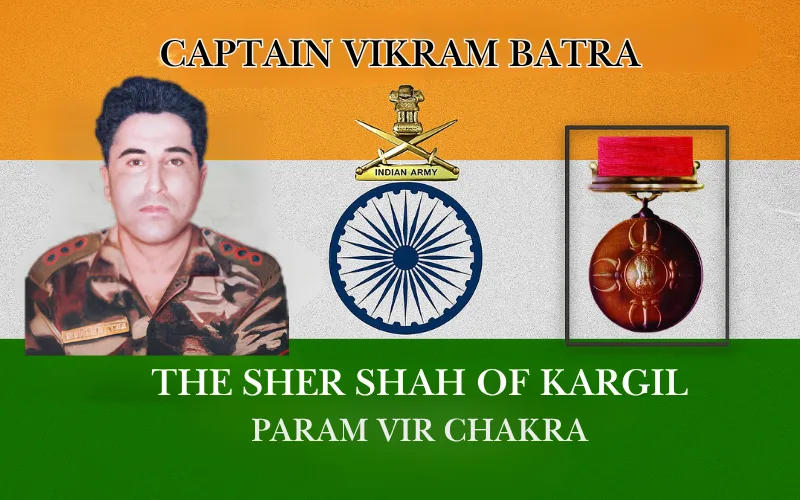
Captain Vikram Batra: Quick Facts at a Glance (2025 Updated)
HERO SPOTLIGHT: The Story That Inspired Millions
Discover the complete biography of Captain Vikram Batra, the 24-year-old hero who became India’s most celebrated Kargil warrior. Learn about his journey from the hills of Palampur to the peaks of Kargil, his eternal love with Dimple Cheema, and why his sacrifice continues to inspire a nation 26 years after his martyrdom.
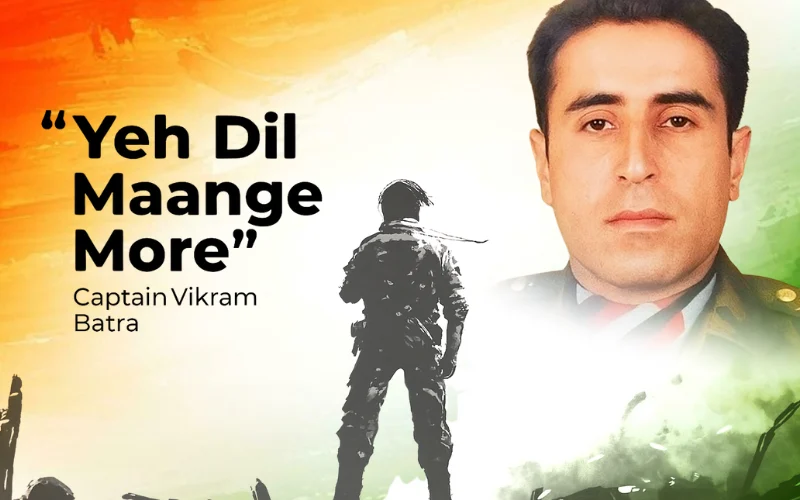
Yeh Dil Maange More!” – The Shershah of Kargil
India’s Youngest Kargil War Hero | Param Vir Chakra Awardee
9 September 1974 – 7 July 1999 | Forever 24, Forever Immortal
🎖️ The Complete Biography of India’s Most Beloved War Hero
From Palampur to Point 4875 | The Eternal Love Story of Vikram Batra and Dimple Cheema | How “Yeh Dil Maange More” Became India’s War Cry | The Youngest Officer to Capture Two Strategic Peaks | Why Dimple Never Married | Complete Family Story, Rare Photos & Untold Facts
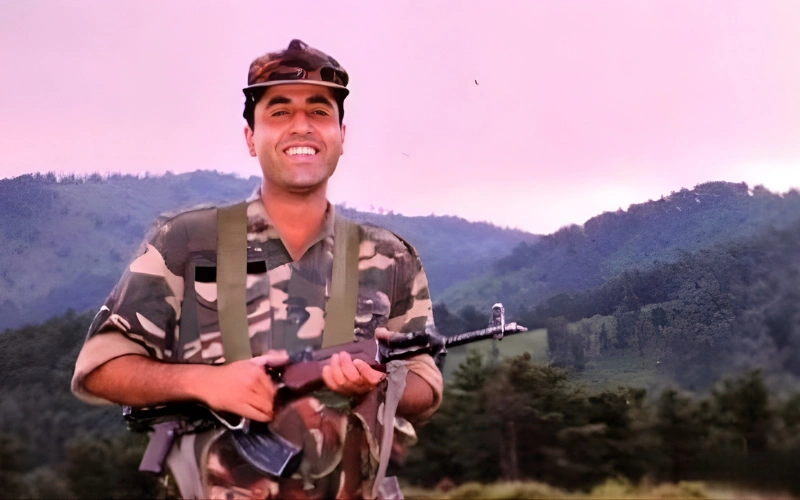
Quick Facts Summary
| Attribute | Details |
|---|---|
| Full Name | Captain Vikram Batra, PVC |
| Nickname | Shershah (Lion King), Sher Shah, Luv |
| Date of Birth | 9 September 1974 |
| Date of Martyrdom | 7 July 1999 (Age 24 years) |
| Birthplace | Palampur, Himachal Pradesh, India |
| Nationality | Indian |
| Religion | Hindu |
| Zodiac Sign | Virgo |
| Rank | Captain (Indian Army) |
| Regiment | 13th Battalion, Jammu and Kashmir Rifles |
| Service Number | IC-57556 |
| Years of Service | 1996 – 1999 |
| Highest Award | Param Vir Chakra (Posthumous) |
👤 Personal Information
| Category | Information |
|---|---|
| Full Name | Vikram Batra |
| Rank & Title | Captain Vikram Batra, PVC (Param Vir Chakra) |
| Popular As | Shershah of Kargil, Hero of Point 4875 |
| Date of Birth | 9 September 1974 |
| Age at Martyrdom | 24 years, 9 months, 28 days |
| Birthplace | Palampur, Kangra District, Himachal Pradesh |
| Hometown | Palampur, Himachal Pradesh |
| Nationality | Indian 🇮🇳 |
| Religion | Hinduism |
| Caste/Community | Punjabi Hindu |
| Zodiac Sign | Virgo ♍ |
| Blood Group | B+ |
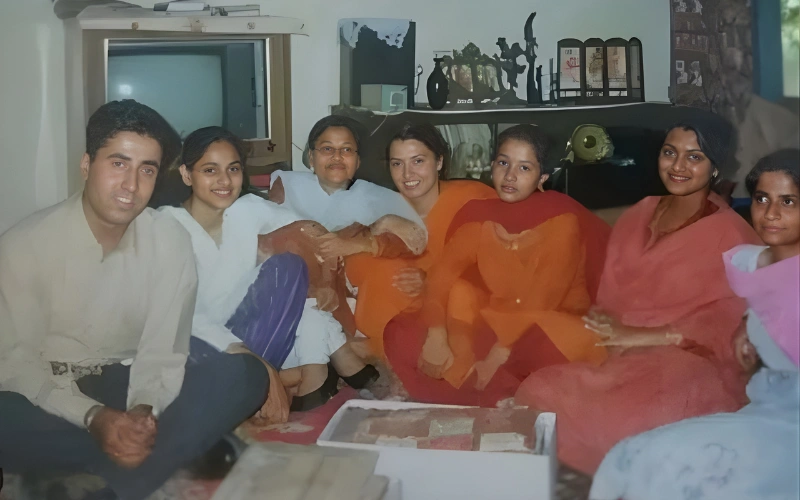
👨👩👦 Family & Personal Life
| Relation | Name & Details |
|---|---|
| Father | Shri Girdhari Lal Batra (Principal) |
| Mother | Smt. Kamal Kanta Batra (School Teacher) |
| Twin Brother | Vishal Batra (Born 14 minutes after Vikram) |
| Sisters | Nutan Batra, Seema Batra |
| Marital Status | Unmarried (Engaged) |
| Girlfriend/Fiancée | Dimple Cheema (Now a school teacher in Chandigarh) |
| Spouse | Never married – Dimple Cheema chose to remain unmarried in his memory |
| Children | None |
| Family Background | Born in an educated middle-class family with strong values |
💔 The Eternal Love Story: Vikram Batra and Dimple Cheema
Captain Vikram Batra and Dimple Cheema shared a beautiful love story that has become legendary. Vikram Batra girlfriend Dimple Cheema met him during their college days at Panjab University, Chandigarh. The real Vikram Batra and Dimple love story began when they were pursuing their respective degrees.
Dimple Vikram Batra was not just a girlfriend but Vikram’s soulmate. Before leaving for the Kargil War, Captain Vikram Batra promised Dimple that he would return to marry her. He even said, “I’ll come back for you, Dimple, or I’ll make sure you’re proud of me.” The engagement between Vikram Batra and Dimple was kept private, known only to close family and friends.
After Vikram Batra death on July 7, 1999, Dimple Vikram Batra wife (though they never officially married) made a heart-wrenching decision – she chose to remain unmarried for the rest of her life, honoring the memory of Captain Vikram Batra. Real Dimple Batra continues to live in Chandigarh, working as a school teacher, keeping Vikram’s memory alive.
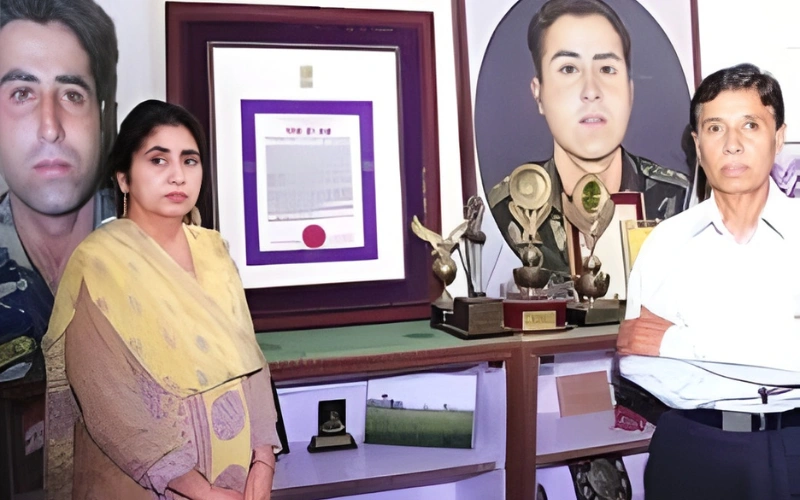
Dimple Batra now participates in various events honoring Captain Vikram Batra and shares their love story to inspire young Indians. The Vikram Batra movie “Shershaah” (2021) beautifully portrayed their relationship, with actress Kiara Advani playing Dimple’s role. Dimple Vikram Batra real photo shows a woman of immense dignity and strength.
Dimple Batra age today is around 48 years (as of 2025), and she remains devoted to Vikram’s legacy. Her sacrifice exemplifies true love – Dimple Batra in real life transformed personal loss into a lifetime mission of honoring India’s brave martyr.
📏 Physical Statistics
| Attribute | Measurement |
|---|---|
| Height | 5 feet 10 inches (178 cm) |
| Weight | Approximately 75 kg (165 lbs) |
| Eye Color | Dark Brown |
| Hair Color | Black |
| Build | Athletic, Muscular |
| Physical Fitness | Excellent – Trained Army Officer |
🎓 Educational Journey of Captain Vikram Batra
Early Education
| Level | Institution | Location | Years |
|---|---|---|---|
| Primary School | D.A.V. Public School | Palampur, Himachal Pradesh | 1980-1989 |
| Secondary School | Central School, Palampur | Palampur, Himachal Pradesh | 1989-1992 |
| Graduation | D.A.V. College | Chandigarh | 1992-1995 |
| Degree | B.Sc. Medical Sciences | Panjab University, Chandigarh | Completed 1995 |
| Post-Graduation (Started) | M.A. English | Chandigarh | 1995-1996 (Left for Army) |
Military Training
| Training Program | Institution | Year | Details |
|---|---|---|---|
| Indian Military Academy (IMA) | IMA Dehradun | 1996-1997 | Joined IMA as part of the Manekshaw Battalion |
| Commissioning | Indian Army | 6 December 1997 | Commissioned as Lieutenant |
| First Posting | 13 JAK Rifles | 1997-1999 | Posted to Jammu & Kashmir Regiment |
| Commando Training | Various Army Schools | 1998 | Specialized in mountain warfare and combat operations |
🌟 Academic Excellence
Captain Vikram Batra was not just a brave soldier but also an exceptional student. During his school days, Vikram was a brilliant student who excelled in academics, sports, and extracurricular activities. He was particularly good at table tennis and karate, holding a green belt. At D.A.V. College Chandigarh, Vikram Batra was known for his leadership qualities and was selected for the National Cadet Corps (NCC).
⚔️ Military Career Timeline of Captain Vikram Batra
| Year | Event/Position | Details |
|---|---|---|
| 1995 | CDS Exam Preparation | Cleared Combined Defence Services Examination |
| June 1996 | Joined IMA | Started training at Indian Military Academy, Dehradun (Manekshaw Battalion) |
| 6 Dec 1997 | Commissioned as Lieutenant | Passed out from IMA and commissioned into Indian Army |
| 1997 | Posted to 13 JAK Rifles | Joined 13th Battalion of Jammu and Kashmir Rifles |
| 1998 | Lieutenant to Captain | Promoted to the rank of Captain |
| 1998-1999 | Counter-insurgency Operations | Participated in operations in Jammu & Kashmir region |
| May 1999 | Kargil War Begins | Pakistani forces infiltrate Indian territory in Kargil |
| 20 June 1999 | Operation to Recapture Point 5140 | Successfully led the mission to recapture Point 5140 – First major victory |
| 29 June 1999 | Battle for Point 4875 | Led assault on Point 4875 (one of the most difficult peaks) |
| 7 July 1999 | Martyrdom at Point 4875 | Attained martyrdom while saving a fellow officer during the final assault |
| 15 Aug 1999 | Param Vir Chakra Announced | Awarded India’s highest military honor (Posthumous) |
| 26 Jan 2000 | PVC Presented to Family | Parents received Param Vir Chakra from President K.R. Narayanan |
🎖️ Point 5140 – “Yeh Dil Maange More!”
20 June 1999: Captain Vikram Batra led Delta Company in the daring capture of Point 5140. After successfully capturing this strategic peak, he radioed back the now-famous message “Yeh Dil Maange More!” – borrowing from a popular Pepsi advertisement. This became his signature war cry and symbolized the indomitable spirit of Indian forces.
⛰️ Point 4875 – “Sher Shah on Top”
29 June – 7 July 1999: The assault on Point 4875 was one of the most challenging operations. Despite being injured in the preliminary assault, Captain Vikram Batra refused evacuation. On July 7, during the final assault, he noticed his junior officer Lieutenant Naveen seriously injured. Without hesitation, Vikram Batra pulled him to safety, but in doing so, exposed himself to enemy fire. He was fatally hit by a burst of gunfire to his chest.
💀 The Ultimate Sacrifice
7 July 1999, 3:30 AM: Captain Vikram Batra’s last words were “Jai Mata Di!” (Victory to the Divine Mother). His sacrifice ensured that Point 4875 was captured, and he became immortalized as the “Shershah of Kargil.” His body was recovered the next day, and the entire nation mourned the loss of this young hero.
🏅 Major Achievements & Recognition
| Year | Award/Honor | Description |
|---|---|---|
| 1999 | Param Vir Chakra (PVC) | India’s highest military decoration, awarded for displaying distinguished acts of valor during wartime (Posthumous) |
| 1999 | National Hero Status | Recognized across India as the “Shershah of Kargil” |
| 2000 | Various Memorials | Schools, roads, and institutions named after him across India |
| 2021 | Biographical Film “Shershaah” | Bollywood film starring Sidharth Malhotra depicting his life and valor |
| Ongoing | Inspiration for Youth | His story continues to inspire millions of Indians to join armed forces |
🎖️ Param Vir Chakra Citation
“Captain Vikram Batra, of 13 JAK Rifles, was awarded the Param Vir Chakra for displaying the most conspicuous bravery during the Kargil operations. He led his platoon in the recapture of Point 5140 and later Point 4875 with raw courage and strategic acumen. During the capture of Point 4875, despite being injured, he led the final assault. When he saw his comrade Lieutenant Naveen was hit by enemy fire and lying injured, Captain Batra without any concern for his own safety, crawled and pulled him to safety, but in doing so, was hit by a burst of machine gun fire in the chest and breathed his last. His last words were ‘Jai Mata Di.'”
🌟 Honors & Memorials Named After Captain Vikram Batra:
- Captain Vikram Batra Stadium – Palampur, Himachal Pradesh
- Vikram Batra Block – IMA Dehradun
- Vikram Batra Road – Multiple cities including Palampur and Chandigarh
- Captain Vikram Batra Government Medical College – Kangra, HP
- Capt. Vikram Batra Shaheed Government Degree College – Palampur
- Bust and Statue – Installed at multiple locations including Palampur
- Documentary Films – Several documentaries chronicling his bravery
Financial Information
| Financial Aspect | Details |
|---|---|
| Rank at Martyrdom | Captain (Indian Army) |
| Service Period | December 1997 – July 1999 (Approximately 19 months) |
| Approximate Salary (1999) | ₹18,000 – ₹25,000 per month (Captain level) |
| Family Compensation | Government provided ex-gratia, pension, and other benefits to the family |
| Param Vir Chakra Benefits | Monthly allowance for PVC recipients’ families (currently ₹30,000-50,000 range) |
| Life Philosophy on Wealth | “Some goals are so worthy, it’s glorious even to fail” – Vikram valued honor over wealth |
| Legacy Value | Priceless – His sacrifice inspired millions and continues to motivate generations |
💭 Captain Vikram Batra’s Perspective on Money
Captain Vikram Batra chose service over wealth. He could have pursued lucrative careers in Merchant Navy or private sector, but he chose the Army knowing the pay was modest. For him, the honor of serving the nation and the satisfaction of protecting fellow citizens were worth more than any financial reward. His life teaches us that true wealth lies in purpose, honor, and the difference we make in others’ lives, not in bank balances.
🌟 Special Distinctions & First-Time Achievements
| Distinction | Details |
|---|---|
| Youngest Param Vir Chakra in Kargil | At 24, one of the youngest recipients of PVC during the Kargil War |
| Two Major Peaks Captured | Successfully led operations to capture both Point 5140 and Point 4875 |
| Iconic War Cry Creator | “Yeh Dil Maange More!” became the most famous phrase of the Kargil War |
| Point 4875 Renamed | The peak was renamed “Batra Top” in his honor |
| Subject of Bollywood Blockbuster | First Kargil hero to have a major Bollywood biopic (Shershaah, 2021) |
| National Youth Icon | Became the face of military inspiration for post-2000 generation |
| Eternal Love Symbol | His story with Dimple Cheema represents one of India’s most poignant love stories |
💬 Iconic Quotes by Captain Vikram Batra
– After capturing Point 5140
– Before leaving for Kargil
– His last words before martyrdom
– His life motto
– Reassuring his mother before the operation
📖 Detailed Biography of Captain Vikram Batra
🌅 Early Life and Humble Beginnings
Born on 9 September 1974 in the picturesque town of Palampur, Himachal Pradesh, Vikram Batra came into this world as one of twin sons born to Shri Girdhari Lal Batra and Smt. Kamal Kanta Batra. Interestingly, his twin brother Vishal Batra was born just 14 minutes after him. The Vikram Batra family was a middle-class educated household where values of patriotism, discipline, and education were deeply ingrained.
Growing up in the serene landscapes of Palampur, young Vikram developed a strong connection with nature and the mountains that would later become the theater of his greatest heroism. His father was a government school principal, and his mother was a school teacher, ensuring that education and discipline were central to the upbringing of Vikram Batra and his siblings.
From childhood, Captain Vikram Batra displayed exceptional qualities of leadership and courage. His friends and family recall him as a vibrant, energetic boy who was always ready to help others. The Vikram Batra brother, Vishal, shared an extraordinary bond with him – they were not just twins but best friends who shared dreams and aspirations.
🎯 Childhood Dreams
As a child, Vikram Batra would often play “army-army” with his friends in the mountains surrounding Palampur. Little did anyone know that these childhood games were preparing him for real battles that would etch his name in India’s military history. His mother recalls that even as a young boy, Vikram would say he wanted to serve the nation in uniform.
📚 Educational Journey and Student Life
The Captain Vikram Batra biography reveals a student who excelled not just academically but in sports and extracurricular activities as well. He completed his schooling from D.A.V. Public School in Palampur, where he was known for his discipline and sportsmanship. Vikram was particularly skilled in table tennis and had earned a green belt in karate, demonstrating his physical prowess from an early age.
After completing his schooling, Vikram Batra moved to Chandigarh for higher education. He enrolled at D.A.V. College and later pursued a Bachelor of Science degree in Medical Sciences from Panjab University, Chandigarh. During his college years, he joined the National Cadet Corps (NCC) and quickly rose through the ranks, eventually earning the ‘C’ certificate with distinction.
It was during his college days in Chandigarh that Vikram Batra met Dimple Cheema, who would become the love of his life. The story of Vikram Batra and Dimple is one of pure, selfless love that transcended even death. Vikram Batra Dimple Cheema love story began in the corridors of Panjab University and blossomed into an engagement that remained private.
💪 Decision to Join the Indian Army
After completing his B.Sc., Vikram Batra started pursuing M.A. in English but soon realized his true calling lay elsewhere. Despite having opportunities in the Merchant Navy and other fields, his heart was set on serving the nation as an Army officer. He appeared for the Combined Defence Services (CDS) examination in 1995 and cleared it with flying colors.
In June 1996, Captain Vikram Batra joined the prestigious Indian Military Academy (IMA) in Dehradun as part of the Manekshaw Battalion. His training at IMA transformed the enthusiastic young man into a professional soldier. He excelled in all aspects of training – physical fitness, weapon handling, tactical operations, and leadership.
On 6 December 1997, Vikram Batra passed out from IMA and was commissioned as a Lieutenant in the Indian Army. He was posted to the 13th Battalion of the Jammu and Kashmir Rifles (13 JAK Rifles), one of the most decorated regiments of the Indian Army. This marked the beginning of a short but illustrious military career that would make him a legend.
⚔️ The Kargil War: Defining Moments
In the spring of 1999, Pakistani forces and militants infiltrated Indian territory across the Line of Control (LoC) in the Kargil district of Jammu and Kashmir. They occupied strategic heights, putting Indian forces at a severe disadvantage. The Indian Army launched Operation Vijay to evict the intruders and reclaim Indian territory.
Captain Vikram Batra and his battalion were deployed to the Kargil sector in June 1999. The young officer, barely 24 years old, was about to face the greatest test of his life. The mountains of Kargil, with peaks ranging from 16,000 to 18,000 feet, presented not just a military challenge but also an extreme physical ordeal.
🎖️ The Battle for Point 5140
On 20 June 1999, Captain Vikram Batra was tasked with leading his Delta Company to recapture Point 5140, a strategic peak that had been occupied by Pakistani forces. The mission was extremely dangerous – the peak was heavily fortified, and the approach was steep and exposed to enemy fire.
Capt Vikram Batra devised a brilliant tactical plan. Instead of taking the expected route, he led his men through a more difficult but unexpected path, catching the enemy by surprise. Despite facing heavy automatic fire and grenade attacks, Vikram and his men fought with extraordinary courage. In close combat, Captain Vikram Batra personally engaged and eliminated several enemy soldiers.
After hours of intense fighting in sub-zero temperatures and thin air, Point 5140 was captured. When Vikram Batra radioed back to confirm the success, he used the code word “Yeh Dil Maange More!” – a popular phrase from a Pepsi commercial. This became his legendary war cry and symbolized the spirit of victory. The entire nation soon came to know who is Vikram Batra – the brave young officer who made impossible victories possible.
⛰️ Point 4875 – The Ultimate Sacrifice
Buoyed by the success at Point 5140, Captain Vikram Batra volunteered for another extremely difficult mission – the capture of Point 4875, which was even more strategically important and heavily defended. This peak came to be known as “Sher Shah Top” after his code name “Sher Shah” (Lion King).
The assault on Point 4875 began on 29 June 1999. The approach was treacherous, with near-vertical climbs and the enemy holding commanding positions. During the initial assault, Captain Vikram Batra was injured by splinters from an enemy shell, but he refused to be evacuated. Tying a bandage around his wound, he continued to lead his men.
On the night of 7 July 1999, the final assault was launched. Captain Vikram Batra led from the front, motivating his men with his courage and tactical brilliance. As they neared the top, they came under intense enemy fire. During this critical phase, Lieutenant Naveen, a fellow officer, was seriously injured by enemy fire.
Without a moment’s hesitation, Vikram Batra crawled through the hail of bullets to reach his fallen comrade. He grabbed Lieutenant Naveen and started pulling him to safety, shouting to his men to continue the assault. But in saving his comrade, Captain Vikram Batra exposed himself to enemy fire. A burst of machine gun fire hit him in the chest.
Even as he lay fatally wounded, Captain Vikram Batra continued to encourage his men. His last words were “Jai Mata Di!” (Victory to the Divine Mother). The brave officer breathed his last on that mountain peak, but his sacrifice ensured that Point 4875 was captured. The Indian flag flew atop Point 4875, but the nation had lost one of its bravest sons.
💔 The News Reaches Home
When news of Vikram Batra death reached his family in Palampur, it shattered them. His parents, twin brother Vishal, and sisters were devastated. The Vikram Batra funeral was attended by thousands of people who came to pay their respects to the fallen hero. The entire nation mourned with the Vikram Batra family.
Perhaps the most heart-wrenching moment was when Dimple Vikram Batra, his fiancée, learned of his martyrdom. Dimple Cheema, who had been waiting for Vikram to return so they could marry, made a decision that would inspire millions – she chose never to marry, dedicating her life to preserving the memory of Captain Vikram Batra.
🏅 Recognition and Legacy
On 15 August 1999, India’s Independence Day, Captain Vikram Batra was posthumously awarded the Param Vir Chakra, India’s highest military decoration for valor. The citation praised his “most conspicuous bravery” and “leadership of the highest order.”
On 26 January 2000, Republic Day, the President of India, K.R. Narayanan, presented the Param Vir Chakra to Captain Vikram Batra’s parents in a ceremony that moved the entire nation to tears. His father and mother accepted the honor with immense pride mixed with unbearable grief.
🎬 The Vikram Batra Movie – “Shershaah”
In 2021, Bollywood released “Shershaah,” a biographical film based on the life of Captain Vikram Batra. Actor Sidharth Malhotra portrayed the real Vikram Batra, while Kiara Advani played Dimple Cheema. The Vikram Batra movie was widely acclaimed for its authentic portrayal of the Kargil War and the personal life of this brave officer.
The film brought the story of Captain Vikram Batra to a new generation. Millions of young Indians who were not born during the Kargil War learned about Captain Vikram Batra through this film. The Vikram Batra story in the movie showed not just his military achievements but also his human side – his love for Dimple, his bond with his twin brother, and his zest for life.
Dimple Vikram Batra girlfriend herself was consulted during the making of the film. Dimple Batra in real life shared memories and personal anecdotes that made the portrayal more authentic. The movie featured several Captain Vikram Batra original Kargil war photos and recreated actual battle scenes with remarkable accuracy.
🌟 Impact on Youth and Armed Forces
The Captain Vikram Batra story has inspired countless young Indians to join the armed forces. At recruitment rallies across India, many young aspirants cite Captain Vikram Batra as their role model. The combination of his academic excellence, physical fitness, leadership qualities, and supreme sacrifice represents the ideal that every officer should aspire to.
Every year on 7 July, memorial services are held at Point 4875 (renamed Batra Top) and in Palampur to honor his memory. Veterans, serving officers, and civilians gather to remember Captain Vikram Batra and other martyrs of the Kargil War.
📸 Captain Vikram Batra Photo Gallery
Numerous Captain Vikram Batra photo collections are maintained by the Army, his family, and various military museums. These include pictures from his childhood, college days, IMA training, and actual photographs from the Kargil War. The Captain Vikram Batra original Kargil war photos are particularly poignant, showing the young officer in combat gear, motivating his troops, and celebrating the capture of Point 5140.
Many students create Captain Vikram Batra drawing as part of school projects. His image – in military uniform, saluting the flag – has become an iconic representation of military valor in India.
✨ Interesting & Rare Facts About Captain Vikram Batra
1️⃣ The Twin Connection
Vikram Batra brother Vishal was his identical twin, born just 14 minutes after him. They shared an extraordinary bond. Vishal recalls that on the day Vikram died, he experienced an inexplicable restlessness and unease, almost as if he sensed something had happened to his twin.
2️⃣ Code Name: Sher Shah
During operations, Captain Vikram Batra’s radio code name was “Sher Shah” (Lion King), chosen because of his fearless approach and leadership. After the war, the entire nation began calling him the “Shershah of Kargil.”
3️⃣ The Merchant Navy Opportunity
Before joining the Army, Vikram had cleared the exams for the Merchant Navy and could have had a lucrative career at sea. However, his passion for serving the nation in uniform made him choose the Army over all other options.
4️⃣ Sports Excellence
Vikram was an accomplished sportsman. He was a champion in table tennis and had earned a green belt in karate. His physical fitness was legendary even during IMA training, where he was always among the top performers in endurance exercises.
5️⃣ The Diary Entry
Before leaving for Kargil, Vikram wrote in his diary: “Either I will come back after hoisting the tricolor, or I will come back wrapped in it, but I will be back for sure.” This prophetic statement captured his determination and willingness to sacrifice everything for the nation.
6️⃣ Last Phone Call to Dimple
In his last phone conversation with Dimple Vikram Batra before the final operation, Vikram told her, “Don’t worry, I’ll be back soon, and this time I’m not going to let you go.” Those words haunt Dimple Cheema to this day, but they also give her strength to honor his memory.
7️⃣ The Captured Pakistani Officer
During the capture of Point 5140, Vikram’s unit captured a Pakistani officer who later revealed that they had been given specific orders to capture Captain Vikram Batra alive or dead because of his effectiveness in battle. This shows how much the enemy feared him.
8️⃣ The Unfinished Letter
An unfinished letter to Dimple was found among Vikram’s belongings after his martyrdom. In it, he had written about his dreams for their future together and his hope that the war would end soon so he could return home.
9️⃣ Awards Prediction
After capturing Point 5140, Vikram’s commanding officer told him that he would be recommended for a high gallantry award. Vikram simply smiled and said, “Sir, I’m just doing my duty. The real award is serving the nation and coming back alive to my men and family.”
🔟 The Blood-Stained Indian Flag
The Indian tricolor that was hoisted at Point 4875 after its capture was stained with Captain Vikram Batra’s blood. This flag is now preserved as a sacred relic, symbolizing the ultimate sacrifice made by brave soldiers for the nation’s honor.
Poem on Captain Vikram Batra
In the mountains of Kargil, where eagles dare not fly,
Stood a brave young captain, reaching for the sky.
With “Yeh Dil Maange More!” he led his men ahead,
Fighting for the tricolor, green, white, and red.
Point 5140 fell to his courage and might,
Then came Point 4875, the ultimate fight.
For a fallen comrade, he gave his breath,
“Jai Mata Di!” he cried, embracing valiant death.
Shershah of Kargil, forever you’ll remain,
In every Indian heart, inscribed your name.
Captain Vikram Batra, hero brave and true,
The nation stands proud, saluting you!
💭 Career Philosophy & Leadership Vision
Core Principles
- Lead from the Front: Captain Vikram Batra always believed in leading by example. He never asked his men to do anything he wouldn’t do himself. During assaults, he was always at the front, inspiring his troops with his presence.
- Mission Above Self: His unwavering commitment to the mission was legendary. Even when wounded, he refused evacuation because he knew his men needed his leadership. The mission always came first.
- Brotherhood in Arms: Vikram treated his soldiers like family. His final act of sacrificing his life to save a fellow officer exemplified his belief that no soldier should be left behind.
- Fearlessness with Strategy: While he was extraordinarily brave, Captain Vikram Batra was also a brilliant tactician. His capture of Point 5140 using an unexpected route showed his strategic thinking.
- Eternal Optimism: Even in the most difficult circumstances, Vikram maintained a positive attitude. His famous phrase “Yeh Dil Maange More!” reflected his optimistic and can-do spirit.
- Duty, Honor, Country: These three words encapsulated his life philosophy. He believed that serving the nation was the highest calling and that honor demanded total commitment to duty.
Working Style
Captain Vikram Batra’s working style was characterized by meticulous planning, aggressive execution, and compassionate leadership. His commanding officers and fellow soldiers remember him as someone who:
- Always prepared thoroughly before any operation
- Took care of his soldiers’ welfare and morale
- Made quick decisions under pressure
- Never showed fear, thereby inspiring confidence in his men
- Celebrated victories but remained humble
- Learned from every experience and constantly improved his skills
August 2021
The biographical film “Shershaah” was released on Amazon Prime Video, bringing Captain Vikram Batra’s story to millions of viewers worldwide. The movie became one of the most-watched Indian films on the platform.
September 2021
On what would have been Captain Vikram Batra’s 47th birthday, special tributes were held across the nation. The Indian Army organized memorial events, and social media was flooded with tributes.
July 2022
On the 23rd anniversary of his martyrdom (Kargil Vijay Diwas), a new memorial statue was unveiled in Palampur with his family, including Dimple Cheema, in attendance.
2023
Captain Vikram Batra Government Medical College in Kangra expanded its facilities. The institution continues to train medical professionals while honoring the hero’s name.
July 2024
The 25th anniversary of Kargil Vijay Diwas was marked with special commemorations. Point 4875 (Batra Top) saw veterans and serving officers paying homage.
2025
Preparations are underway for an international documentary on Kargil War heroes, with Captain Vikram Batra’s story as a central narrative. His family continues to participate in motivational programs for youth.
🎯 Dimple Cheema Today
Dimple Batra now continues to work as a teacher in Chandigarh. She has never married, keeping her promise to Captain Vikram Batra. Dimple Cheema regularly participates in events honoring the Kargil martyrs and speaks to students about patriotism and sacrifice. Her dignity and strength have made her a symbol of eternal love and devotion. Dimple Vikram Batra real photo from recent events shows a woman who has transformed personal grief into a mission of inspiring the nation.
💡 Lessons & Inspiration for Aspirants
For Armed Forces Aspirants
- Physical Fitness is Non-Negotiable: Captain Vikram Batra’s excellence in sports and physical training helped him survive and succeed in the harsh Kargil terrain. Aspiring officers must prioritize fitness.
- Leadership Begins with Character: Vikram’s leadership didn’t come from his rank but from his character. He earned respect through integrity, courage, and caring for his men.
- Academic Excellence Matters: His strong educational background helped him in strategic thinking and decision-making during complex military operations.
- Mental Toughness is Key: Operating at 18,000 feet in sub-zero temperatures requires extraordinary mental strength. Build resilience through challenges.
- Teamwork Over Individual Glory: Vikram’s final act was saving a teammate. In the military, the team’s success and safety come before personal glory.
Life Lessons from Captain Vikram Batra
2. Sacrifice Defines Greatness: True heroes put others before themselves.
3. Positivity is Powerful: His optimistic spirit (“Yeh Dil Maange More!”) motivated everyone around him.
4. Promises Must Be Kept: He promised to return with honor, and he did – wrapped in the tricolor.
5. Live Fully: At 24, he lived more fully than many who live to 80. Quality of life matters more than quantity.
Conclusion: The Eternal Shershah
Captain Vikram Batra lived for just 24 years, but in that brief span, he achieved what many cannot in a lifetime. From the peaceful hills of Palampur to the treacherous peaks of Kargil, his journey was one of transformation – from a bright, ambitious young man to an immortal national hero.
The Captain Vikram Batra biography is not just about military valor; it’s a story of human excellence. It teaches us that greatness isn’t measured in years but in impact. Vikram Batra impacted millions – through his courage, his sacrifice, and his indomitable spirit symbolized by his war cry “Yeh Dil Maange More!”
His love story with Dimple Cheema adds another dimension to his legacy. Their love, cut short by war, continues to inspire people about the depths of commitment and sacrifice. Dimple Vikram Batra’s decision to never marry showcases a different kind of bravery – the courage to live with loss while honoring a promise.
The Vikram Batra family, especially his twin brother Vishal and his parents, have carried forward his legacy with dignity and grace. They’ve ensured that new generations know about their son who gave everything for the nation.
Today, whether through the Vikram Batra movie “Shershaah,” through Captain Vikram Batra information taught in schools, through poems on Captain Vikram Batra, or through Captain Vikram Batra drawing made by children, his story lives on. Every essay on Captain Vikram Batra written by students, every Captain Vikram Batra photo shared on social media, keeps his memory alive.
💫 The Immortal Message
If Captain Vikram Batra could speak to us today, he would probably say:
❓ Frequently Asked Questions (FAQ)
Q1: Who was Captain Vikram Batra?
Who is Vikram Batra? Captain Vikram Batra was an Indian Army officer of the 13 JAK Rifles who died fighting in the Kargil War in 1999. He was posthumously awarded the Param Vir Chakra, India’s highest military decoration, for his bravery. Known as the “Shershah of Kargil,” he successfully captured Point 5140 and Point 4875.
Q2: How did Captain Vikram Batra die?
How did Captain Vikram Batra died? Captain Vikram Batra died on July 7, 1999, during the assault on Point 4875 in Kargil. He was fatally shot while trying to rescue his injured fellow officer Lieutenant Naveen. Despite being wounded, he pulled his comrade to safety but was hit by enemy machine gun fire. His last words were “Jai Mata Di!”
Q3: Did Captain Vikram Batra have a wife?
Captain Vikram Batra wife: No, Captain Vikram Batra never married. However, he was engaged to Dimple Cheema, his college sweetheart. They planned to marry after he returned from Kargil, but he attained martyrdom before their wedding. Dimple Vikram Batra wife (though technically fiancée) chose never to marry and has remained single in his memory, working as a teacher in Chandigarh.
Q4: What is the relationship between Vikram Batra and Dimple Cheema?
Vikram Batra and Dimple met during their college days at Panjab University, Chandigarh. They fell in love and got engaged, though they kept it private. Vikram Batra girlfriend Dimple Cheema was waiting for him to return from Kargil so they could marry. After Vikram Batra death, she made the heart-wrenching decision to never marry, honoring their love. Dimple Vikram Batra remains unmarried to this day and continues to keep his memory alive.
Q5: Where is Dimple Cheema now?
Dimple Batra now (2025) is approximately 48 years old and works as a school teacher in Chandigarh. Real Dimple Batra has never married and occasionally participates in events honoring Captain Vikram Batra. Dimple Batra in real life maintains a dignified, private life while keeping Vikram’s legacy alive through her participation in memorial services and educational initiatives.
Q6: What was Captain Vikram Batra’s famous quote?
Captain Vikram Batra quotes: His most famous quote is “Yeh Dil Maange More!” (The heart wants more!), which he radioed after capturing Point 5140. Other memorable quotes include: “Either I will come back after hoisting the tricolor, or I will come back wrapped in it, but I will be back for sure” and his final words “Jai Mata Di!”
Read More: Ajit Doval UPSC Rank
Explore more fun blogs at: Ajit Doval Salary
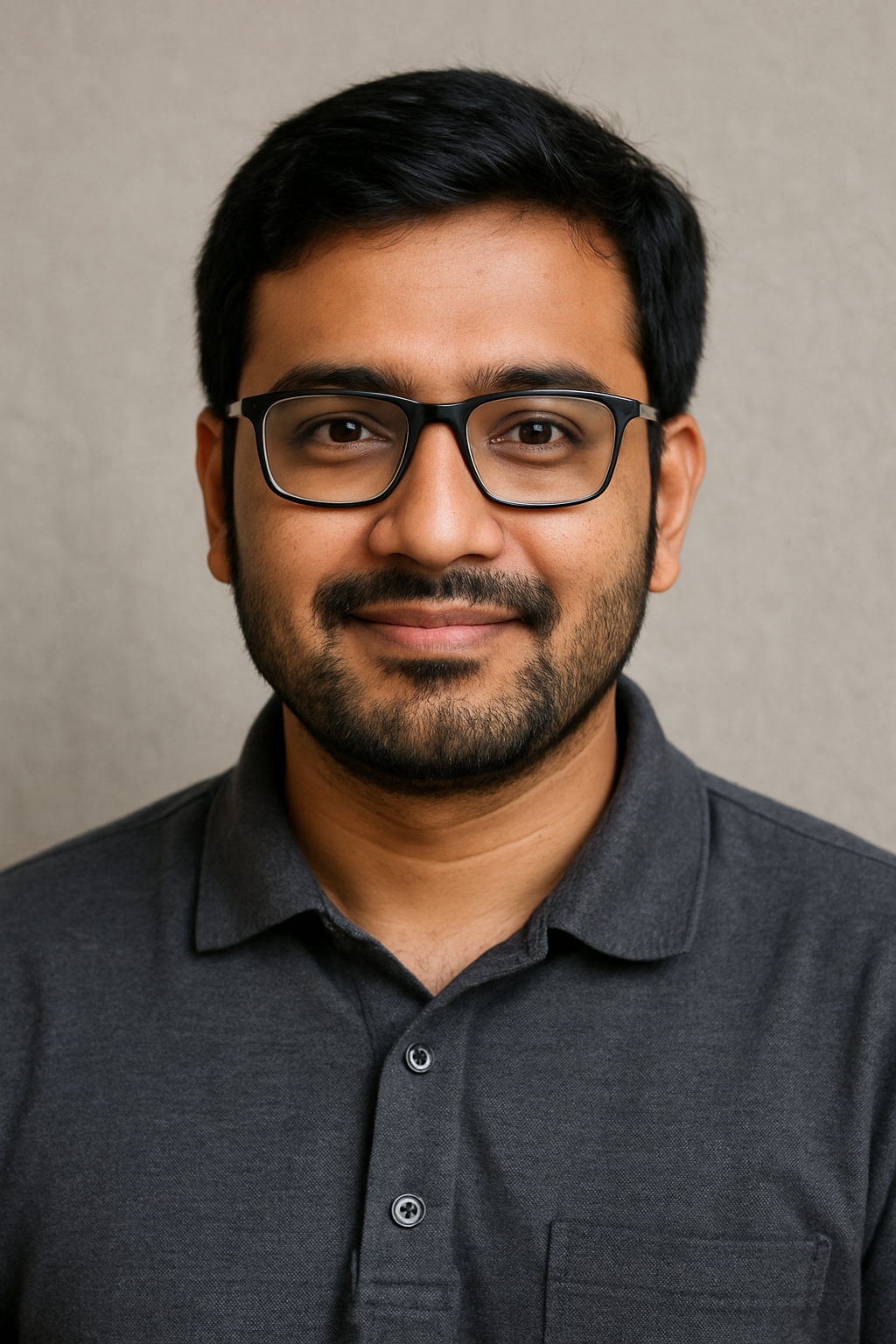
Nishant Kumar is the founder and lead content creator at OfficersDetails.com, a platform dedicated to delivering accurate, verified information about officers in government, corporate, and legal sectors. With a strong background in public administration and data research, Nishant is passionate about transparency, governance, and simplifying access to essential leadership profiles.