
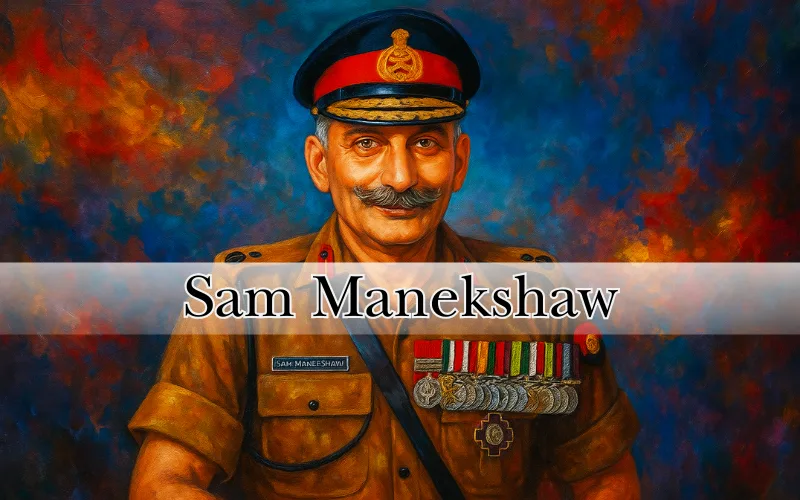
Sam Manekshaw: The Fearless Field Marshal Who Survived 9 Bullets and Changed India’s Destiny
Sam Manekshaw was born as Sam Hormusji Framji Jamshedji Manekshaw on April 3, 1914, in Amritsar, Punjab. The name Sam Manekshaw became synonymous with military excellence, strategic brilliance, and unwavering patriotism. His nickname “Sam Bahadur” (Sam the Brave) was affectionately given by the soldiers he commanded, reflecting the deep respect and admiration he commanded throughout his military career.
Quick Facts Summary Table
| Category | Details |
|---|---|
| Full Name | Sam Hormusji Framji Jamshedji Manekshaw |
| Popular Name | Sam Manekshaw, Sam Bahadur |
| Date of Birth | April 3, 1914 |
| Date of Death | June 27, 2008 |
| Age at Death | 94 years |
| Birth Place | Amritsar, Punjab, British India |
| Nationality | Indian |
| Religion | Zoroastrianism (Parsi) |
| Zodiac Sign | Aries |
| Height | 5’11” (180 cm) |
| Spouse | Silloo Bode (m. 1939-2001) |
| Children | 2 daughters – Sherry and Maja |
| Education | Hindu Sabatoo College, Nainital; Indian Military Academy, Dehradun |
| Rank | Field Marshal (First in Indian Army) |
| Famous For | Leading India to victory in 1971 Indo-Pak War |
| Awards | Padma Vibhushan, Padma Bhushan, Military Cross |
Personal Details Table
| Attribute | Information |
|---|---|
| Full Name | Sam Hormusji Framji Jamshedji Manekshaw |
| Nickname | Sam Bahadur |
| Date of Birth | April 3, 1914 |
| Birth Place | Amritsar, Punjab, British India |
| Date of Death | June 27, 2008 |
| Age at Death | 94 years |
| Nationality | Indian |
| Religion | Zoroastrianism (Parsi community) |
| Community/Caste | Parsi |
| Zodiac Sign | Aries |
| Hometown | Initially Amritsar, later Coonoor, Tamil Nadu |
Sam Manekshaw religion was Zoroastrianism, and he belonged to the Parsi community, known for their significant contributions to Indian nation-building. His Parsi heritage instilled in him values of courage, integrity, and service.
Family & Personal Life: The Foundation of Sam Manekshaw
| Relationship | Name | Details |
|---|---|---|
| Father | Hormusji Manekshaw | Medical Doctor |
| Mother | Heerabai Manekshaw | Homemaker |
| Siblings | 5 brothers and sisters | Close-knit family |
| Spouse | Silloo Bode | Married in 1939; died in 2001 |
| Children | Sherry Manekshaw, Maja Daruwala | Two daughters |
| Marital Status | Married (widowed in 2001) | 62 years of marriage |
| Residence at Death | Coonoor, Tamil Nadu | Military Hospital Wellington |
Sam Manekshaw Education: The Making of a Strategic Mind
Sam Manekshaw education journey was marked by both academic challenges and remarkable determination. Despite initial setbacks, his educational path led him to become one of India’s greatest military leaders.
Educational Timeline
Early Education: Sam Manekshaw attended Sherwood College in Nainital and later joined Hindu Sabatoo College in Nainital for his higher secondary education. Initially, young Sam wanted to become a doctor like his father, but fate had different plans.
Medical School Rejection: Sam Manekshaw initially applied to medical school but was rejected. This rejection became a turning point in his life, redirecting him toward a military career that would define Indian military history.
Indian Military Academy: In 1932, Sam Manekshaw joined the first batch of the Indian Military Academy (IMA) in Dehradun. He was among the first 40 cadets to be trained at this prestigious institution. He graduated in 1934 as one of the top cadets and was commissioned into the British Indian Army.
Sam Manekshaw Education Table
| Institution | Location | Period | Qualification/Achievement |
|---|---|---|---|
| Sherwood College | Nainital, India | 1920s | Primary & Secondary Education |
| Hindu Sabatoo College | Nainital, India | Early 1930s | Higher Secondary Education |
| Indian Military Academy (IMA) | Dehradun, India | 1932-1934 | First batch graduate; Commissioned as 2nd Lieutenant |
| Staff College | Quetta, Pakistan | 1940s | Advanced military training |
| Imperial Defence College | London, UK | 1957 | Higher command training |
Sam Manekshaw education emphasized not just academic learning but practical military strategy, leadership, and tactical excellence that would serve him throughout his career.
Physical Statistics: The Commanding Presence
Sam Manekshaw height and physical presence contributed to his commanding personality that inspired respect and admiration.
Physical Attributes Table
| Attribute | Measurement |
|---|---|
| Height | 5 feet 11 inches (180 cm) |
| Weight | Approximately 75-80 kg (in prime) |
| Eye Color | Dark Brown |
| Hair Color | Black (turned grey with age) |
| Build | Athletic and fit throughout military career |
| Distinctive Features | Military bearing, handlebar mustache, piercing gaze |
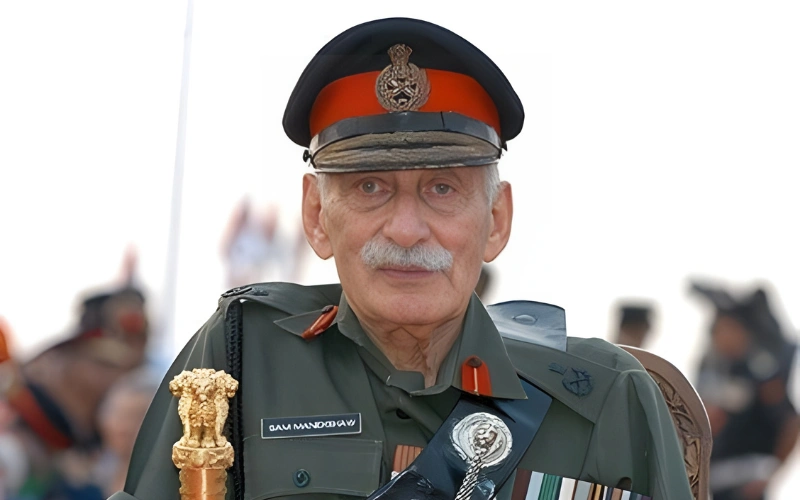
Sam Manekshaw height of 5’11” was above average for his generation, and his erect military posture made him an imposing figure. His trademark handlebar mustache and impeccable military uniform became his signature look.
Career Timeline: Five Decades of Military Excellence
Sam Manekshaw served the Indian Army for an incredible 42 years (1934-1969 active service, then Field Marshal until death), witnessing and shaping some of the most significant military events in modern Indian history.
Comprehensive Career Timeline Table
| Year | Rank/Position | Posting/Achievement | Significance |
|---|---|---|---|
| 1934 | Second Lieutenant | 4th Battalion, 12th Frontier Force Regiment | Commissioned from first IMA batch |
| 1939 | Captain | Frontier operations, NWFP | Early combat experience |
| 1942 | Major | Burma Campaign, World War II | Severely wounded; awarded Military Cross |
| 1947 | Lieutenant Colonel | Military Operations Directorate | Partition operations |
| 1952 | Brigadier | Director Military Operations | Strategic planning role |
| 1957 | Major General | GOC 26 Infantry Division | First divisional command |
| 1962 | Lieutenant General | Corps Commander IV Corps | Sino-Indian War experience |
| 1964 | Lieutenant General | Army Commander Western Command | Strategic posting |
| 1969 | General | Chief of Army Staff | 8th Chief of Indian Army |
| 1971 | General | Chief of Army Staff | Led India to victory in Bangladesh Liberation War |
| 1973 | Field Marshal | First Field Marshal of India | Historic promotion |
| 1973-2008 | Field Marshal | Retired but honored position | Elder statesman of military |
Major Achievements & Recognition: Sam Manekshaw Awards
Sam Manekshaw awards and recognition span military honors, civilian decorations, and international acclaim. His contribution to Indian military history earned him some of the highest honors.
Awards & Honors Table
| Year | Award/Honor | Description | Awarding Authority |
|---|---|---|---|
| 1942 | Military Cross (MC) | Gallantry in Burma Campaign despite severe wounds | British Indian Army |
| 1968 | Padma Bhushan | Distinguished service of high order | Government of India |
| 1972 | Padma Vibhushan | Exceptional and distinguished service | Government of India |
| 1973 | Field Marshal | First Indian to achieve this rank | Government of India |
| Various | Five Foreign Awards | International recognition | Foreign governments |
| 1971 | National Hero Status | Leading 1971 War victory | Indian Nation |
Sam Manekshaw awards also included numerous unit citations, commendations, and medals from his five-decade military career. The most prestigious honor was his appointment as Field Marshal, the highest military rank in India.
The 1971 War Victory: Sam Manekshaw’s Defining Moment
🪖 Field Marshal Sam Manekshaw – 1971 Indo-Pak War & Leadership Summary
| Category | Details |
|---|---|
| Greatest Achievement | Leadership during the 1971 Indo-Pakistan War resulting in the liberation of Bangladesh |
| Strategic Traits | Strategic brilliance, meticulous planning, and decisive leadership |
| Duration of War | 13 days (3–16 December 1971) |
| Result | Decisive Indian victory |
| Outcome | Liberation of Bangladesh; 93,000 Pakistani POWs captured |
| Indian Casualties | Minimal compared to the objectives achieved |
| Strategic Planning Duration | 8 months of preparation (as insisted by Sam Manekshaw) |
⚔️ Planning & Strategy
| Aspect | Details |
|---|---|
| Prime Minister’s Query (April 1971) | Indira Gandhi asked if the Army was ready for war |
| Manekshaw’s Response | “I am always ready, sweetie,” but advised waiting until winter for better strategic conditions |
| Significance | Showed professional integrity and sound military judgment |
🤝 Relationship with Indira Gandhi
| Aspect | Details |
|---|---|
| Nature of Relationship | Complex yet effective professional relationship |
| Disagreements | Occurred occasionally, notably during the 1975 Emergency |
| Mutual Respect | Both respected each other’s authority and responsibilities |
| Outcome | Their cooperation ensured success in the 1971 War |
🏛️ Stance During 1975 Emergency
| Aspect | Details |
|---|---|
| Context | During the Emergency, political pressure mounted on the Army |
| Manekshaw’s Response | Refused to deploy the Army for political purposes |
| Significance | Upheld constitutional values and maintained the Army’s apolitical stance |
Sam Manekshaw Death: The End of an Era
Sam Manekshaw died on June 27, 2008, at the age of 94 at the Military Hospital in Wellington, Coonoor, Tamil Nadu. Sam Manekshaw death reason was complications from pneumonia. He had been suffering from age-related ailments for several years.
Final Years & Death Details
| Aspect | Details |
|---|---|
| Date of Death | June 27, 2008 |
| Age | 94 years |
| Place | Military Hospital, Wellington, Coonoor, Tamil Nadu |
| Cause | Pneumonia complications |
| Funeral | Full military honors, Parsi funeral rites |
| National Mourning | Declared by Government of India |
| Legacy | Tributes from across the nation and military |
When Sam Manekshaw died, the nation mourned the loss of its greatest military leader. His funeral was attended by military officials, political leaders, and thousands of citizens who came to pay their respects to Sam Bahadur.
Sam Manekshaw Quotes: Words of Wisdom
| No. | Quote | Context / Meaning |
|---|---|---|
| 1 | “I am always ready, sweetie.” | Said to Prime Minister Indira Gandhi when she asked about war readiness — reflects his confidence and composure. |
| 2 | “If a man says he is not afraid of dying, he is either lying or is a Gurkha.” | A tribute to the bravery of the Gurkha soldiers under his command. |
| 3 | “The British gave me an award for killing people in Burma. The Indians gave me an award for not killing people in India.” | A witty remark about receiving honors for different reasons — highlighting the irony between war and peace. |
| 4 | “There are two kinds of people in the world: the Gurkhas and the rest.” | A humorous yet admiring statement about his respect for Gurkha soldiers. |
| 5 | “Professional knowledge and professional competence are the main attributes of leadership.” | Emphasizes that true leadership comes from skill and expertise, not authority alone. |
| 6 | “I wonder whether those of our political masters who have been put in charge of the defence of the country can distinguish a mortar from a motor; a gun from a howitzer; a guerrilla from a gorilla, although a vast majority of them resemble the latter.” | A biting critique of politicians’ lack of military understanding — showcasing his trademark sarcasm. |
| 7 | “You give me a task and then interfere in my method of accomplishing it — choose one or the other.” | Highlights his belief in autonomy and trust in leadership. |
| 8 | “If you don’t want to go to war, don’t join the army. Wars are fought to be won.” | Reflects his clarity and decisiveness about the purpose and seriousness of military duty. |
Vicky Kaushal Sam Manekshaw Movie: Sam Bahadur (2023)
The biographical film “Sam Bahadur” was released in December 2023, with Vicky Kaushal portraying Sam Manekshaw. The Sam Manekshaw movie brought the legendary Field Marshal’s life story to millions of Indians.
Sam Bahadur Movie Details
| Aspect | Details |
|---|---|
| Movie Title | Sam Bahadur |
| Release Date | December 1, 2023 |
| Lead Actor | Vicky Kaushal as Sam Manekshaw |
| Director | Meghna Gulzar |
| Supporting Cast | Sanya Malhotra (as Silloo Manekshaw), Fatima Sana Shaikh (as Indira Gandhi) |
| Focus | Sam Manekshaw’s military career and 1971 war |
| Reception | Critically acclaimed for historical accuracy |
Vicky Kaushal Sam Manekshaw portrayal was widely praised for capturing the Field Marshal’s charisma, wit, and military bearing. The Sam Manekshaw movie introduced a new generation to India’s greatest soldier.
Financial Information
As a military officer and later Field Marshal, Sam Manekshaw lived on military pay and pension. Unlike modern celebrities, detailed financial information wasn’t public.
Estimated Financial Details
| Category | Approximate Details |
|---|---|
| Military Salary (as Chief) | As per government scales (1969-1973) |
| Field Marshal Pension | Lifetime honorary pay as Field Marshal |
| Net Worth | Modest; lived in military accommodations |
| Assets | Home in Coonoor, personal effects |
| Financial Philosophy | Service over wealth; simple military life |
Sam Manekshaw never pursued commercial ventures or wealth accumulation. His legacy was service, not riches.
Administrative Positions Held
Military Command Positions (Chronological)
| Period | Position | Command/Responsibility |
|---|---|---|
| 1934-1952 | Various regimental & staff postings | Field and staff experience |
| 1952-1955 | Director Military Operations | Strategic planning at Army HQ |
| 1957-1959 | GOC 26 Infantry Division | First divisional command |
| 1962-1964 | Corps Commander IV Corps | Multi-divisional command |
| 1964-1969 | GOC-in-C Western Command | Strategic command covering Pakistan border |
| 1969-1973 | Chief of Army Staff | 8th Chief, overall Army command |
| 1973-2008 | Field Marshal | Honorary five-star rank |
Detailed Biography: The Sam Manekshaw Story
Early Life: Humble Beginnings in Amritsar
Sam Manekshaw was born in the holy city of Amritsar, Punjab, on April 3, 1914. His Parsi family, though not wealthy, valued education and service. Young Sam showed intelligence but was also known for mischief and independence.
Growing up in British India, Sam witnessed the freedom struggle and the transformation of Indian society. His father’s medical practice exposed him to different sections of society, developing his empathy and understanding of common people.
Educational Struggles & Triumphs
The rejection from medical school was a defining moment. Instead of accepting defeat, Sam Manekshaw found a newspaper advertisement for the new Indian Military Academy in Dehradun. He applied, was selected, and became part of history as one of the first 40 Indian cadets to train at IMA.
Sam Manekshaw education at IMA was rigorous. He excelled in military tactics, leadership exercises, and physical training. His graduation in 1934 marked the beginning of an extraordinary military career.
World War II: Forged in Fire
Sam Manekshaw’s baptism by fire came in Burma during World War II. As a young Major in 1942, he led his company against Japanese forces. In one engagement, he was shot nine times in the stomach and chest. The Australian doctor who first examined him wrote him off as dead.
However, another doctor, recognizing his courage under fire, operated on him despite little hope. Sam Manekshaw survived against all odds. For his extraordinary courage despite severe wounds, he was awarded the Military Cross, the first of many honors.
This near-death experience shaped his perspective on life, leadership, and mortality. He often joked about death, having faced it so closely.
Partition & Nation-Building (1947)
During India’s partition, Sam Manekshaw served in the Military Operations Directorate. He witnessed the tragic division of the Indian Army and the communal violence that accompanied Partition. His professionalism during this chaotic period earned him recognition as a capable staff officer.
Rise Through the Ranks (1947-1969)
Sam Manekshaw’s rise through military ranks was marked by exceptional performance in every assignment:
- 1950s: Served in various command and staff positions, attending prestigious military courses
- 1962: As Corps Commander during the Sino-Indian War, gained valuable lessons about preparedness
- 1964-1969: As GOC-in-C Western Command, developed deep understanding of Pakistan border operations
- 1969: Appointed Chief of Army Staff, becoming the 8th Indian Army Chief
The 1971 Masterstroke
When Prime Minister Indira Gandhi asked in April 1971 if the Army was ready to go to war over the East Pakistan crisis, Sam Manekshaw gave his famous “always ready” response but insisted on waiting until winter.
His reasoning was strategic brilliance:
- Monsoons would make movement difficult in East Pakistan
- Mountain passes with China would be closed by winter, preventing Chinese intervention
- More time allowed for better military preparation and international diplomacy
- Training of Mukti Bahini (Bangladesh freedom fighters) could be completed
Against political pressure for immediate action, Sam Manekshaw held firm. When war came in December 1971, the Indian Army was fully prepared. The result was a 13-day war that ended with:
- Bangladesh liberation
- 93,000 Pakistani POWs – largest surrender since World War II
- Minimal Indian casualties
- Complete strategic victory
Field Marshal: The Ultimate Honor
On January 1, 1973, Sam Manekshaw was promoted to Field Marshal, the first Indian to achieve this five-star rank. He retired from active service in 1973 but remained Field Marshal for life—an honorary rank that recognized his unparalleled contribution to the Indian military.
Post-Retirement Years
After retirement, Sam Manekshaw settled in Coonoor, Tamil Nadu. He lived a quiet life, occasionally giving speeches and interviews. He maintained his wit and wisdom until his final days, becoming an elder statesman whom military officers and civilians alike revered.
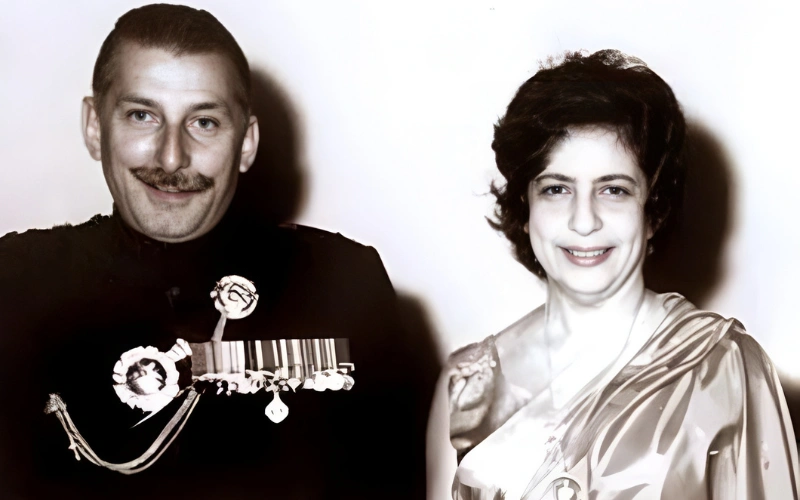
The death of his beloved wife of Field Marshal Sam Manekshaw, Silloo, in 2001 was a personal blow. They had been married for 62 years, and her passing left a void in his life.
Final Chapter
In his 90s, Sam Manekshaw suffered from age-related ailments. He was hospitalized at the Military Hospital in Wellington, Coonoor, where he had lived for decades. On June 27, 2008, Sam Manekshaw died peacefully at age 94.
His death marked the end of an era. The nation mourned the loss of its greatest soldier, and military personnel across the country paid tribute to Sam Bahadur.
Recent Developments & Legacy (2008-2025)
Posthumous Recognition
- Sam Bahadur Film (2023): Biographical movie starring Vicky Kaushal
- Military Institutions: Named after Sam Manekshaw across India
- Annual Commemorations: Birth and death anniversaries marked by military ceremonies
- Books & Documentaries: Numerous works chronicling his life
- National Hero Status: Consistently ranked among greatest Indians
Family Legacy
Sam Manekshaw’s daughters and grandson continue to honor his memory while maintaining private lives. His daughter Maja Daruwala became a distinguished human rights lawyer, carrying forward his values of justice and service.
Conclusion: The Eternal Sam Bahadur
Field Marshal Sam Manekshaw was more than India’s first five-star general. He was:
- A strategist who understood that wars are won through preparation
- A leader who put his soldiers before himself
- A patriot who served his nation without seeking personal glory
- A mentor who inspired generations through example
- A human who combined professional excellence with warmth and wit
His life from a medical school rejection to becoming India’s first Field Marshal epitomizes the triumph of determination, professionalism, and service. Sam Manekshaw religion, background, or any personal characteristic never defined him—his service to India did.
The Sam Manekshaw movie and continued national reverence ensure that new generations learn from Sam Bahadur’s example. His famous quotes, strategic brilliance, and personal courage remain relevant today.
Sam Manekshaw’s legacy isn’t just military victory—it’s a template for leadership, integrity, and nation-building that transcends military service and inspires all Indians.
Read More : anshika verma ips , kanishak kataria , shakti dubey age
Frequently Asked Questions (FAQ)
1. What was Sam Manekshaw’s rank?
Field Marshal, the highest rank in the Indian Army. He was the first Indian officer to achieve this five-star rank in 1973.
2. When did Sam Manekshaw die?
Sam Manekshaw died on June 27, 2008, at age 94 in Coonoor, Tamil Nadu. The Sam Manekshaw death reason was pneumonia complications.
3. Who was Sam Manekshaw’s wife?
Sam Manekshaw wife was Silloo Bode, whom he married in 1939. Wife of Field Marshal Sam Manekshaw passed away in 2001. Sam Manekshaw wife death occurred seven years before his own passing.
4. How many children did Sam Manekshaw have?
Sam Manekshaw children were two daughters—Sherry Manekshaw and Maja Daruwala. He also had grandchildren, including a Sam Manekshaw grandson who maintains family privacy.
5. What religion was Sam Manekshaw?
Sam Manekshaw religion was Zoroastrianism. He was a Parsi, belonging to the Parsi community of India.
6. What was Sam Manekshaw’s relationship with Indira Gandhi?
Sam Manekshaw and Indira Gandhi had a professional relationship marked by mutual respect and occasional disagreements. He worked effectively with her during the 1971 war. Field Marshal Sam Manekshaw Emergency stance in 1975 showed his commitment to keeping the Army apolitical.
7. Is there a movie on Sam Manekshaw?
Yes, the Sam Manekshaw movie titled “Sam Bahadur” was released in December 2023, with Vicky Kaushal playing Sam Manekshaw. The Vicky Kaushal Sam Manekshaw portrayal was critically acclaimed.
Read More:Shubham Kumar IAS
Explore more fun blogs at:Yohan Poonawalla
Nishant Kumar is the founder and lead content creator at OfficersDetails.com, a platform dedicated to delivering accurate, verified information about officers in government, corporate, and legal sectors. With a strong background in public administration and data research, Nishant is passionate about transparency, governance, and simplifying access to essential leadership profiles.