
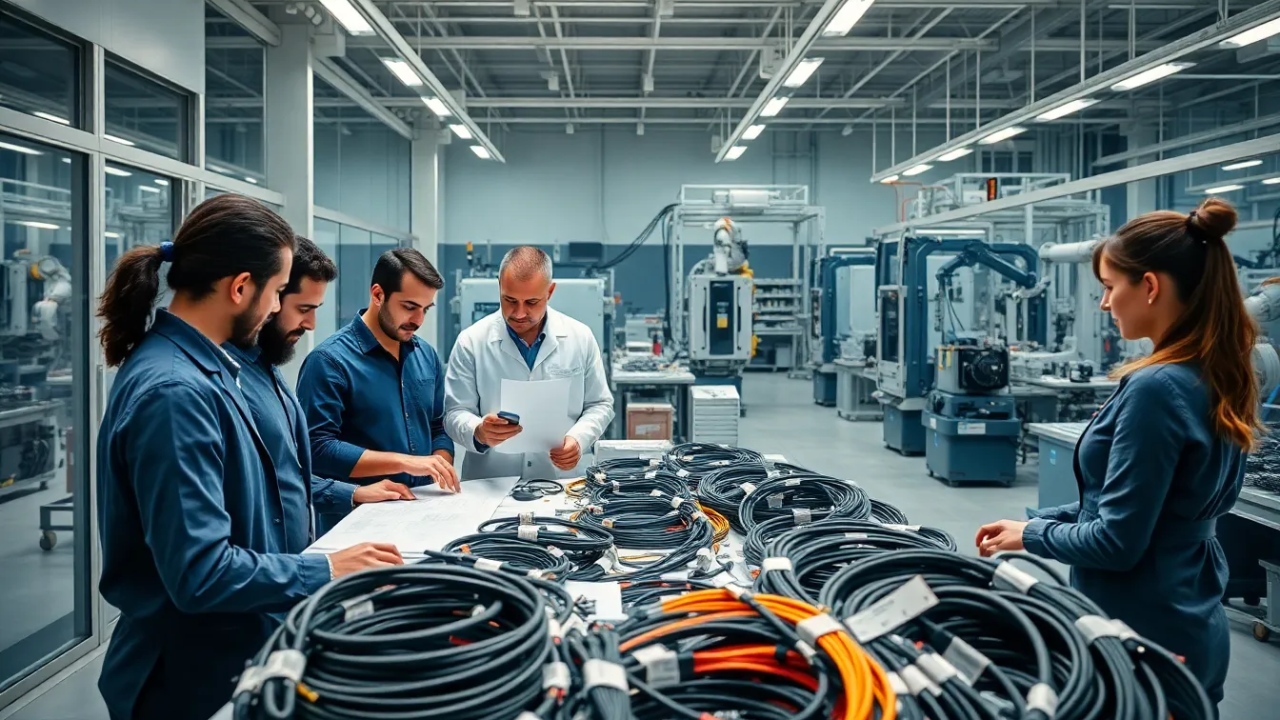
A power cord or wire harness usually gets noticed only when something goes wrong. The appliance does not start. A connector heats up. A harness rubs against a metal edge. A plug looks fine during inspection, but fails after months of bending near the strain relief. For OEM buyers, these are not small component issues. They become warranty calls, delayed dispatches, rework on the assembly line and, in the worst cases, safety risks.
That is why choosing reliable power cord manufacturers in India should start with engineering fit, not only landed cost. A power cord has to match the product’s load, plug type, current rating, cable length, conductor size, insulation grade and operating environment. A 6 Amp cord for a monitor is not the same buying decision as a 16 Amp cord for a water heater, UPS, power tool or industrial appliance. The difference may be hidden inside the cable: copper cross-section, usually specified in sq mm or AWG, insulation thickness, flexibility, plug moulding quality and how well the cord survives repeated bending.
The approved sample is only the beginning. The real test is whether the 10,000th piece behaves exactly like the first one. Procurement teams should ask how the manufacturer controls conductor sizing, plug moulding, tensile strength, polarity, continuity and high-voltage safety checks. Strain relief should not be treated as a visual feature. It should be supported by pull-force testing and, where the application demands it, flex-cycle testing near the plug or connector end. These details decide whether a cord remains safe after daily use, movement and installation stress.
When auditing an Indian manufacturer, baseline systems such as BIS certification and ISO 9001:2015 compliance help remove guesswork from batch consistency. Facilities like Ni-San Cords are structured around OEM requirements, where power cords are not sold as generic accessories but manufactured to match appliance, electronics, medical equipment, UPS and industrial product needs. This is important for buyers who need repeatable quality, stable bulk supply and components that fit smoothly into existing production lines.
The same discipline applies when selecting wire harness manufacturers in India. A wire harness is not just a taped bundle of wires. It is a routed electrical assembly that must carry power or signals through a product without confusion, loose connections or abrasion damage. In appliances, EV-related assemblies, medical equipment, lighting systems and industrial machines, harness quality affects serviceability, safety and final product reliability.
A serious harness supplier should be able to discuss wire gauge, terminal type, connector brand, crimp height, insulation support, pull-force values, sleeve material, bend radius, routing path, colour coding and labelling. Good harness manufacturing is often manual at key stages, but it should never be uncontrolled. IPC/WHMA-A-620 is a useful benchmark because it gives acceptance criteria for cable and wire harness workmanship, including crimping, soldering, mechanical securing and inspection expectations.
Before approving bulk production, OEM teams should test the harness inside the actual product, not only on a table. Check connector locking, wire slack, routing near heat zones, vibration points, sharp edges and service access. The best supplier is not the one that simply agrees to a drawing; it is the one that spots risk before the product reaches the customer.
For OEM buyers, power cords and wire harnesses are small parts with large consequences. Choosing an experienced manufacturer such as Ni-San Cords can help improve fitment, reduce assembly rework and support safer product performance across every batch.
