
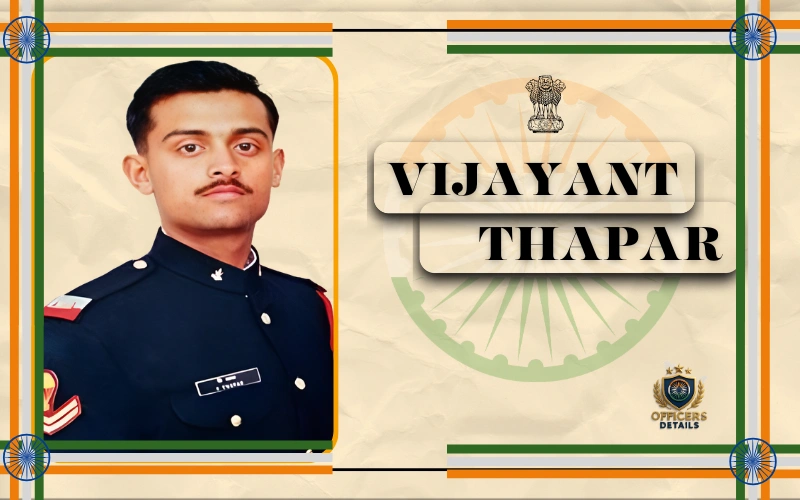
The extraordinary life of vijayant Thapar continues to ignite the hearts of millions across India. As Captain Vijayant Thapar, this young officer embodied the highest ideals of duty, bravery, and selfless service. From humble army roots to becoming a Vir Chakra awardee in the 1999 Kargil War, the journey of vijayant Thapar is a powerful tale of patriotism that transcends generations. The legacy of Captain Vijayant Thapar reminds every Indian—especially youth and aspirants—that true greatness lies in serving the nation without regret.
Quick Facts Summary: Captain Vijayant Thapar
|
Full Name |
Captain Vijayant Thapar (Nickname: Robin) |
|
Birth Date |
26 December 1976 |
|
Age at Death |
22 Years |
|
Birthplace |
Nangal, Punjab, India |
|
Nationality |
Indian |
|
Religion |
Sikhism / Hindu (Thapar Family) |
|
Zodiac Sign |
Capricorn |
|
Military Rank |
Captain, Indian Army |
|
Regiment |
2 Rajputana Rifles (Infantry) |
|
Commission Date |
12 December 1998 |
|
Date of Martyrdom |
28-29 June 1999 (Kargil War) |
|
Highest Award |
Vir Chakra (India’s Third Highest Military Honour) |
|
Marital Status |
Unmarried |
Captain Vijayant Thapar Personal Information
Captain Vijayant Thapar was a legendary Kargil War hero and a symbol of patriotism and courage. Below is comprehensive personal information about this military icon:
Basic Details
|
Full Name |
Captain Vijayant Thapar |
|
Nickname |
Robin |
|
Meaning of Name |
Named after India’s main battle tank ‘Vijayant’ (Sanskrit: Victorious) |
|
Date of Birth |
26 December 1976 |
|
Place of Birth |
Nangal, Punjab, India |
|
Age at Death |
22 Years Old |
|
Date of Death |
28-29 June 1999 |
|
Current Hometown |
Noida, Uttar Pradesh, India |
|
Nationality |
Indian |
|
Religion/Caste |
Thapar (Hindu-Sikh community) |
|
Zodiac Sign |
Capricorn (♑) |
Family Background & Personal Life of Captain Vijayant Thapar
Captain Vijayant Thapar came from a distinguished military family with a rich legacy of service to the nation. His family background deeply influenced his decision to join the Indian Army and pursue a career dedicated to national security.
Family Details
|
Father |
Colonel V.N. Thapar (Retired Indian Army Officer) |
|
Mother |
Mrs. Tripta Thapar |
|
Brother |
Shri Vijender Thapar |
|
Sister |
Not Publicly Disclosed |
|
Spouse |
Unmarried |
|
Children |
No Children |
|
Great-Grandfather |
Karta Ram Thapar (Captain, British Indian Army) |
|
Military Heritage |
Third-Generation Army Officer |
|
Family Residence |
Noida, Uttar Pradesh |
Personal Life Characteristics
Childhood Dreams and Aspirations: From childhood, Vijayant Thapar had an unwavering dream of serving his nation as a soldier. He would play with toy guns, wear his father’s military peak cap, and march around his home pretending to be an army officer. These childhood games were more than just play—they were manifestations of his true calling.
Personal Habits and Interests: Captain Thapar was an avid diary writer who meticulously documented his daily tasks and future aspirations. He maintained a detailed journal that revealed his noble intentions, including his dream to adopt a child and support their education. His favorite pastime included watching sports, particularly wrestling, boxing, and other athletic pursuits at his battalion.
Hobbies and Outdoor Activities: He was exceptionally fond of outdoor activities and was known to spend considerable time observing sports and athletic competitions at his military unit. His passion for physical fitness and sports made him an admired figure among his fellow soldiers.
Marital Status: Captain Vijayant Thapar remained unmarried throughout his short but illustrious military career. At just 22 years of age, he never had the opportunity to marry or start a family, but his legacy as a national hero remains eternal.
Educational Background of Captain Vijayant Thapar
Captain Vijayant Thapar’s educational journey was marked by excellence, discipline, and a strong commitment to personal development. His academic achievements and military training shaped him into one of India’s finest military officers.
Schools and Academic Institutions
|
Institution |
Location |
Period |
|
Army Public School |
Dhaula Kuan, New Delhi |
Primary Education |
|
St. Mary’s Academy |
Meerut, Uttar Pradesh |
Secondary Education (1993 Batch) |
|
Indian Military Academy (IMA) |
Dehradun, Uttarakhand |
Officer Training (1996-1998) |
Academic Achievements and Awards
At the Indian Military Academy, Dehradun: Vijayant Thapar demonstrated exceptional talent across both academics and sports during his Officer Training. His achievements included:
- Silver Medal in Academics – Stood Second in Order of Merit during IMA training
- Gold Medal in Water Polo – Despite a shoulder injury sustained during boxing tournament, he won the prestigious Gold Medal
- Outstanding Performance – Excelled in all areas of military training and physical fitness
- Leadership Skills – Demonstrated exceptional leadership qualities during training exercises
Physical Statistics: Captain Vijayant Thapar
|
Height |
Approximately 5’10” (178 cm) |
|
Build |
Athletic and Muscular |
|
Eye Color |
Brown |
|
Hair Color |
Black |
|
Physical Fitness |
Exceptional (Military Standard) |
|
Distinctive Features |
Confident Military Bearing and Disciplined Posture |
Military Career Timeline of Captain Vijayant Thapar
Captain Vijayant Thapar’s military career, though brief, was remarkable and filled with significant achievements. Below is a year-wise chronology of his military service and postings.
|
Year |
Event/Posting |
Details |
|
1996-1998 |
IMA Training |
Officer training at Indian Military Academy, Dehradun. Excelled in academics and sports. |
|
12 Dec 1998 |
Commission |
Commissioned as Lieutenant in Army Service Corps (ASC) with Second in Order of Merit |
|
Dec 1998 – Jan 1999 |
First Posting |
Posted with 2 Rajputana Rifles at Gwalior for attachment tenure (Infantry unit posting) |
|
Jan – May 1999 |
Kashmir Operations |
Unit moved to Kupwara sector for counter-terrorism operations. Witnessed two fierce encounters. |
|
25 May 1999 |
Kargil War Deployment |
Received orders to move to Drass sector for Operation Vijay against Pakistani intruders |
|
28 June 1999 |
Battle of Tololing |
Led platoon assault on Knoll area in Drass. Conducted heroic operations under heavy enemy fire. |
|
29 June 1999 |
Martyrdom |
Achieved martyrdom while leading his platoon against enemy positions. Age: 22 years. |
|
1999 (Post) |
Vir Chakra Award |
Posthumously awarded India’s third-highest military honour by the President of India |
Major Achievements & Recognition: Captain Vijayant Thapar
Military Honors and Awards
|
Award/Honor |
Year Conferred |
Description and Significance |
|
Vir Chakra (VrC) |
1999 (Posthumous) |
India’s Third-Highest Military Honour. Awarded for his acts of bravery during Operation Vijay in the Kargil War. This is the highest recognition a soldier can receive for valour in combat. |
|
Silver Medal (IMA) |
1998 |
Awarded for standing Second in Order of Merit at Indian Military Academy during officer training |
|
Gold Medal (Water Polo) |
1998 |
Won despite a shoulder injury sustained during boxing tournament, showcasing exceptional perseverance |
|
Kargil Vijay Medal (Unofficial) |
1999 |
Recognized as a symbol of the victorious Kargil War and India’s triumph over Pakistani aggression |
Vir Chakra Citation – Complete Details
Official Citation for Vir Chakra Award
“On 28 June 1999, Captain Vijayant Thapar was commanding the Leading platoon of Alfa Company, which was tasked to assault area Knoll in Drass Sector from the north during Operation Vijay. While advancing, the platoon was hit by accurate enemy artillery barrage and it suffered heavy casualties. Captain Thapar organized evacuation of the casualties and quickly rallied his shell-shocked platoon for the attack. Personally leading the attack from the Northern face against enemy’s Medium Machine Gun fire, which was holding up the Company’s assault, he fearlessly charged at the enemy position firing from the hip and throwing grenades.
During this act, he was grievously injured in the hand and stomach but continued to advance, ordering his men to follow him. His indomitable spirit, exceptional courage, and unwavering commitment to duty exemplified the highest traditions of the Indian Army.”
Special Distinctions: Unique Contributions and Firsts
Rare and Notable Achievements
- Named After a Battle Tank: Uniquely named ‘Vijayant’ after India’s main battle tank, symbolizing strength and victory even before his birth. This name selection reflected his father’s vision for his son.
- Second Rank Holder at IMA: Stood Second in Order of Merit during his Officer Training at Indian Military Academy, demonstrating exceptional academic excellence alongside military training.
- Gold Medalist Despite Injury: Won Gold Medal in Water Polo despite sustaining a shoulder injury during boxing tournament, showcasing remarkable determination and resilience.
- Youngest Kargil War Hero: One of the youngest Indian Army officers to achieve martyrdom during the Kargil War at the age of 22.
- Exceptional Leadership Under Extreme Pressure: Demonstrated outstanding leadership by rallying his troops and leading charges even after sustaining grievous injuries.
- Memorial Temple: His regiment constructed a temple at Knoll in his memory—a rare honor for a junior officer, reflecting the deep respect and admiration his unit had for him.
- Inspiring Journal Legacy: Maintained a detailed diary documenting his aspirations, including plans to adopt a child and donate organs, revealing his noble character and humanitarian values.
- Posthumous Book Biography: His father published ‘Vijyant at Kargil: The Biography of a War Hero’ in 2020, making his story known to countless aspiring soldiers and civilians.
Detailed Biography: Captain Vijayant Thapar – A Complete Life Story
Early Life and Family Heritage
Captain Vijayant Thapar was born on 26 December 1976 in Nangal, Punjab, into one of India’s most distinguished military families. At the time of his birth, his father, Colonel V.N. Thapar, was posted at Pathankot with an Armoured Brigade. The child’s name ‘Vijayant’ was carefully chosen—it is the name of India’s main battle tank, a decision that reflected his father’s profound hope that his son would grow to embody the strength, courage, and invincibility symbolized by this powerful machine of war. Vijayant was his parents’ answer to a prayer, a child born into a legacy of service and sacrifice.
His great-grandfather, Karta Ram Thapar, had served in the British Indian Army as a captain, and his grandfather had also been an officer. With this rich military heritage spanning three generations, Vijayant Thapar was born into a tradition where serving the motherland was not merely a profession but a sacred duty. His father, Colonel V.N. Thapar, became his greatest inspiration and role model throughout his childhood and adolescence.
Childhood: Dreams of a Soldier
From his earliest years, Vijayant Thapar demonstrated an unwavering passion for military service. Unlike other children who played with dolls and toys, young Vijayant’s favorite playthings were guns and military equipment. He would spend hours in his home pretending to be a soldier, wearing his father’s military peak cap and carrying his cane as if it were a rifle. These were not mere games—they were manifestations of a calling that had gripped his soul from childhood. His playmates would often find him marching around in military formation, giving commands, and practicing tactical maneuvers.
His family recognized that this was not a fleeting childhood fantasy but a profound and genuine ambition. Every family member understood that Vijayant’s destiny was intertwined with the Indian Army. His parents nurtured this dream, encouraging him to pursue physical fitness, academic excellence, and the development of leadership skills necessary for a military officer.
Educational Journey: Path to Excellence
To prepare himself for his dream, Vijayant Thapar attended some of the finest educational institutions in India. He began his primary education at Army Public School, Dhaula Kuan in New Delhi, an institution known for producing disciplined and patriotic citizens. His secondary education was completed at St. Mary’s Academy in Meerut, where he was part of the 1993 batch. Throughout his schooling, Vijayant excelled academically and participated actively in sports. His teachers recognized his exceptional qualities—his dedication, his discipline, his unwavering focus, and his natural leadership abilities.
Every examination score, every sports achievement, and every leadership role he undertook was another step toward his ultimate goal of joining the Indian Army. In 1996, at the age of 19, Vijayant took the next crucial step in his journey. He appeared for the Combined Defence Services (CDS) examination and successfully cleared it. This achievement opened the doors to the prestigious Indian Military Academy at Dehradun, where the nation’s finest military officers are trained.
Indian Military Academy: Training and Triumphs
From 1996 to 1998, Vijayant Thapar underwent rigorous training at the Indian Military Academy (IMA) in Dehradun, one of the world’s premier military institutions. The IMA training is known for its intensity, discipline, and the transformation it brings to cadets. Vijayant thrived in this environment. His academic performance was exceptional—he stood Second in Order of Merit for the entire course, an achievement that earned him the Silver Medal.
This was not merely an academic honor; it reflected his intellectual prowess, his capacity for absorbing complex military doctrine, and his commitment to excellence in every academic endeavor. Beyond academics, Vijayant was an outstanding athlete. He participated in boxing and water polo, the latter becoming his particular passion. However, during a boxing tournament, he sustained a serious shoulder injury that would have sidelined most athletes.
Vijayant’s response was remarkable. Despite the pain and physical limitation caused by his injury, he continued to compete in water polo. His determination and courage were rewarded when he won the Gold Medal in water polo, cementing his reputation as not just an athlete but as a sportsman of extraordinary character. His fellow cadets and instructors recognized his exceptional qualities.
He was not only academically strong and athletically gifted but also possessed the leadership qualities that distinguish great military officers from merely competent ones. When he passed out of IMA in December 1998, Vijayant Thapar was commissioned as a Captain with the rank of Second Lieutenant (later Captain) in the Army Service Corps, with his exceptional academic and athletic records ensuring his rapid recognition within the Indian Army.
First Military Posting: From Gwalior to Kashmir
After his commission on 12 December 1998, Captain Vijayant Thapar was posted to serve with the 2 Rajputana Rifles, an infantry regiment known for its valour and tradition. His first assignment took him to Gwalior in early 1999. He spent only about a month at this posting before his unit received urgent orders to move to Kashmir for counter-terrorism operations. The Kupwara sector in Kashmir was one of the most dangerous operational areas in India at that time, with frequent encounters with militants and insurgents.
During his tenure in Kupwara, Captain Vijayant Thapar witnessed two fierce encounters with enemy forces. These were his first real combat experiences, and they tested his courage, his tactical knowledge, and his ability to lead men under fire. These early encounters proved that the young officer possessed not just training but also the natural instincts and bravery required in actual combat situations.
The Kargil War: Operation Vijay Begins
In May 1999, the Indian subcontinent was shocked by news of Pakistani military intrusions in the Kargil-Drass region of Kashmir. After initially denying involvement, it became clear that Pakistani Army units had secretly infiltrated high-altitude positions across the Line of Control, with the intention of controlling strategic territory. The Indian Government responded swiftly, launching Operation Vijay to expel the Pakistani forces and secure Indian territory. On 25 May 1999, Captain Vijayant Thapar’s unit, the 2 Rajputana Rifles, received orders to move immediately to the Drass sector to participate in Operation Vijay.
The war was expected to be intense, and the terrain was extraordinarily challenging. Drass is among the world’s highest battlefields, with altitudes exceeding 4,000 meters, severe weather conditions, and extremely treacherous terrain. Despite having commissioned only six months earlier, Captain Vijayant Thapar was assigned to lead his platoon into battle.
The Battle of Tololing: Final Act of Courage
On 28 June 1999, at the Battle of Tololing and the assault on Knoll in the Drass Sector, Captain Vijayant Thapar was commanding the Leading platoon of Alfa Company. His mission was to assault the Knoll area from the northern face—a heavily defended enemy position. As his platoon advanced toward the enemy position, it came under heavy artillery barrage from Pakistani forces. Shells rained down, causing numerous casualties among his men. Despite the chaos and the loss of his soldiers, Captain Thapar remained calm and composed. His first action was to organize the evacuation of the wounded—a testament to his concern for his men even under devastating fire.
Once his casualties were evacuated, he quickly rallied his remaining troops. These soldiers were shell-shocked, their morale shattered by the intense bombardment. Yet Captain Vijayant Thapar’s presence, his courage, and his unwavering determination inspired them to continue. He personally led the attack from the northern face against the enemy’s defensive positions. The Pakistani forces had positioned Medium Machine Gun (MMG) emplacements that were holding up the entire company’s assault. These machine guns were cutting down advancing Indian soldiers, pinning down his platoon, and threatening to halt the entire operation. Without hesitation, Captain Thapar charged directly at these enemy positions, firing from the hip with his rifle and hurling grenades.
His bravery was extraordinary. He was not commanding from behind—he was leading from the front, sharing the danger and the fire with his men. During this heroic charge, Captain Vijayant Thapar was struck by enemy fire. He sustained grievous injuries—wounds in his hand and stomach. The injuries were severe enough to incapacitate most soldiers. But Captain Thapar continued his advance. Despite bleeding from his wounds, despite the searing pain, despite the certainty that he was mortally wounded, he continued forward. He continued to fire at the enemy, continued to throw grenades, and continued to order his men to follow him.
His final act was to ensure his platoon pressed home the attack. In the moments before his consciousness faded, his last thoughts were of his mission and his men. Captain Vijayant Thapar achieved martyrdom on 29 June 1999, just six months after his commission as an officer. He was 22 years old. His last letter to his parents, found in his belongings, expressed his absolute lack of regrets: ‘Even if I become a human again, I’ll join the Army and serve my nation.’
Legacy and Immortal Memory
Captain Vijayant Thapar’s sacrifice was not in vain. His platoon completed its mission—the Knoll position was secured, and the Pakistani forces were expelled from Indian territory. Following his death, his regiment, the 2 Rajputana Rifles, constructed a temple at the site where he achieved martyrdom. This temple stands as a permanent memorial to his sacrifice and courage. In 1999, he was posthumously awarded the Vir Chakra, India’s third-highest military honor, a recognition of his exceptional bravery and his ultimate sacrifice for his nation. In 2020, his father, Colonel V.N. Thapar, along with co-author, published a biography titled ‘Vijyant at Kargil:
Conclusion:
Legacy and Future Vision The soul of vijayant Thapar watches over India from the heavens, just as he promised. Captain Vijayant Thapar did not die—he became immortal. His sacrifice ensures that future generations inherit a free and strong nation. The story of vijayant Thapar will forever motivate Indians to live with courage and serve with pride.
The Biography of a War Hero,’ sharing his son’s remarkable life story with the world. Every year, Colonel Thapar visits Knoll to pay homage to his fallen son, keeping his memory alive and honoring his sacrifice. In 2023, Captain Vijayant Thapar’s parents appeared on the popular singing television show Indian Idol, where they shared his story with millions of viewers, ensuring that his legacy continues to inspire new generations of Indians.
Read More: एकनाथ शिंदे, anshika verma ips , Vaibhav Suryavanshi, srushti deshmukh age
Frequently Asked Questions
Q1: What is Captain Vijayant Thapar’s full name?
A: His full name is Captain Vijayant Thapar. He was commonly known by his nickname ‘Robin’ among friends and fellow soldiers.
Q2: When and where was Captain Vijayant Thapar born?
A: He was born on 26 December 1976 in Nangal, Punjab, India. He grew up in Noida, Uttar Pradesh.
Q3: Which award did Captain Vijayant Thapar receive?
A: He was posthumously awarded the Vir Chakra (VrC), India’s third-highest military honor for gallantry in combat.
Q4: What was Captain Vijayant Thapar’s rank and regiment?
A: He held the rank of Captain (Lieutenant at the time of martyrdom) and served with the 2 Rajputana Rifles, an infantry regiment of the Indian Army.
Q5: When did Captain Vijayant Thapar achieve martyrdom?
A: He was killed in action on 28-29 June 1999 during the Kargil War, specifically during the Battle of Tololing at Knoll in the Drass Sector.
Q6: How old was Captain Vijayant Thapar when he died?
A: He was only 22 years old at the time of his martyrdom, making him one of the youngest officers to lay down his life during the Kargil War.
Q7: Was Captain Vijayant Thapar married?
A: No, Captain Vijayant Thapar remained unmarried throughout his life. He had no wife or children.
Q8: Who were Captain Vijayant Thapar’s parents?
A: His father was Colonel V.N. Thapar (Retired), a veteran of the Indian Army, and his mother was Mrs. Tripta Thapar. He also had a brother named Vijender Thapar.
Q9: Which schools did Captain Vijayant Thapar attend?
A: He attended Army Public School, Dhaula Kuan (New Delhi) for primary education and St. Mary’s Academy, Meerut (1993 batch) for secondary education.
Q10: When did Captain Vijayant Thapar join the Indian Military Academy?
A: He was commissioned from the Indian Military Academy, Dehradun on 12 December 1998 after completing his officer training (1996-1998).
Explore more blogs at: Pavan Datta IAS
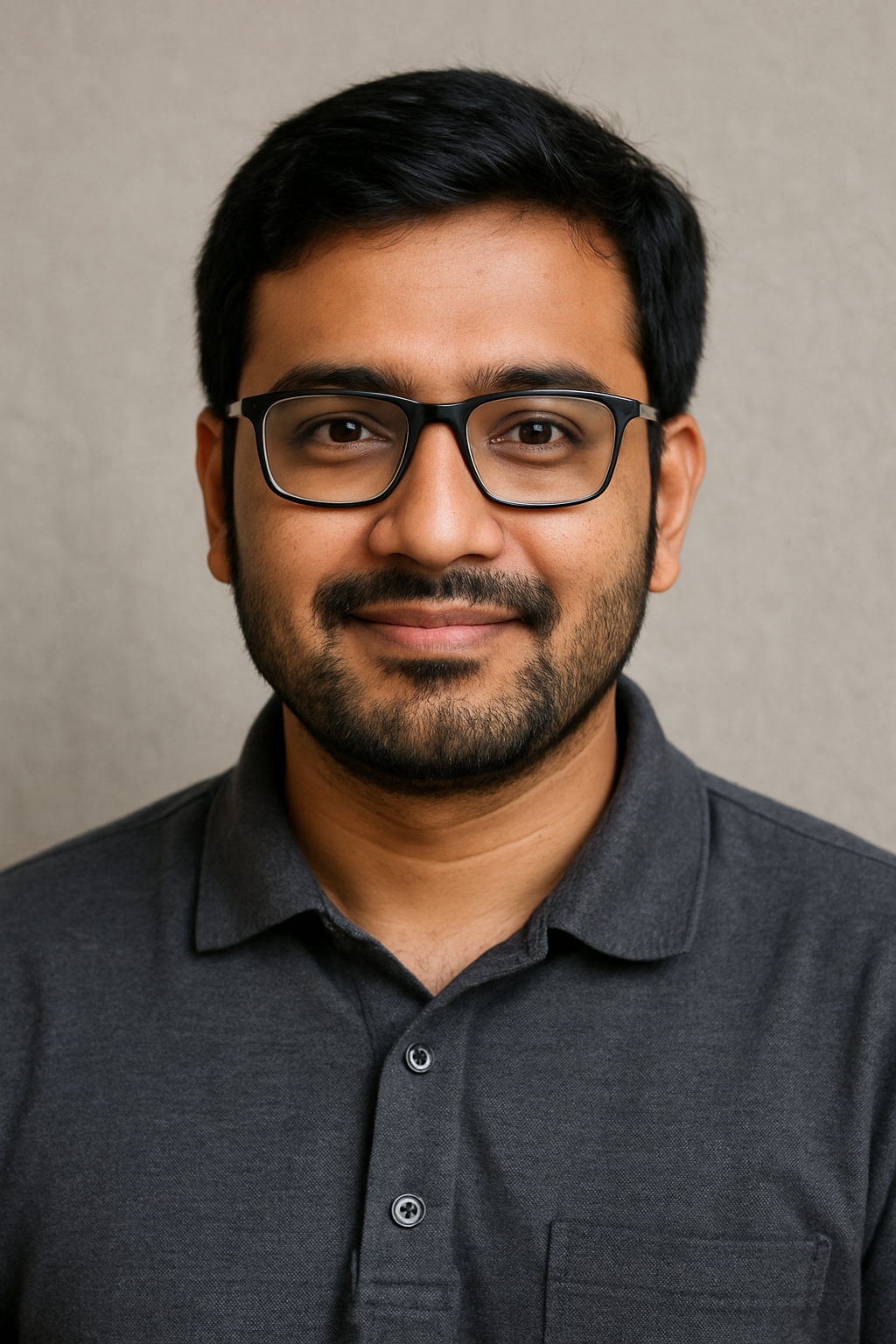
Nishant Kumar is the founder and lead content creator at OfficersDetails.com, a platform dedicated to delivering accurate, verified information about officers in government, corporate, and legal sectors. With a strong background in public administration and data research, Nishant is passionate about transparency, governance, and simplifying access to essential leadership profiles.